Why Experts Get Caught in Avalanches More Than Beginners
When Experience Isn’t Enough
Mentorship and false confidence growing up in avalanche terrain
Growing up on Tahoe’s West Shore, skiing in the backcountry wasn’t a separate discipline, but rather just part of skiing. My parents, who were patrollers at several local resorts, had given me guidance and lectures on which areas were safe, when to go, and where to go. I had the mentorship of friends and other skiers in the community.
After more than ten years of experience with no incident, I was caught in several avalanches in the course of a few years.
In my head, this was an exposure over time problem; spend enough time in avalanche terrain and eventually the odds will be against you, especially when you’re progressing into more complex terrain. I had read every book I could on the science of snow and avalanches, spent countless hours in classes and training, but it turned out that this obsession with knowledge was part of the problem.
In November of 2020, the CAIC (Colorado Avalanche Information Center) released a study assessing the increase in backcountry users and the subsequent increase in avalanche incidents. The research took advantage of the COVID shutdowns that went into place in March 2020, which closed ski resorts and pushed many skiers into the backcountry.
The findings were significant. Before March, the majority of avalanche incidents involved more experienced backcountry skiers by a slight margin; however, after March, that gap widened as a greater percentage of victims were those who were trained and experienced. The paper hypothesized that, among other factors, the influx of new users prompted experienced users to venture into more hazardous terrain in search of fewer tracks.

Exposure Over Time
“Eventually” comes for us all
That same season, we received several feet of new snow the week before Mammoth Mountain closed its lifts due to the pandemic. Before the Eastern Sierra Avalanche Center ceased operations, they had listed the conditions as extreme.
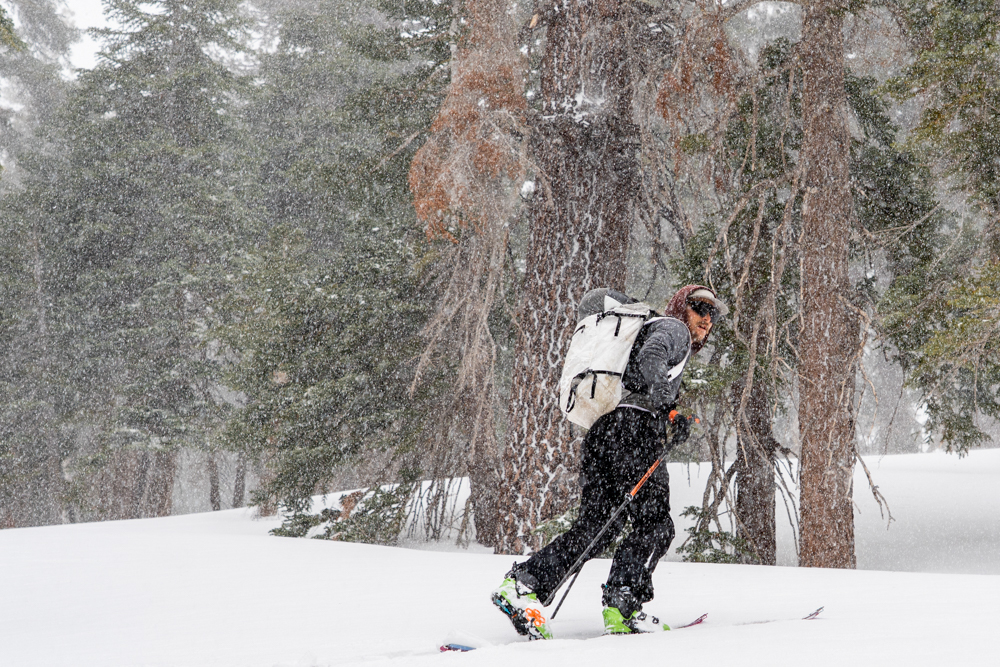
I remember skinning up the road past many groups of skiers on rented equipment, snowshoes, or resort gear. I would turn my transceiver to search, rarely finding any signal. That week, my friends and I walked a bit further than normal to a wooded slope further back in the valley and enjoyed some low-angle powder skiing. I felt like this simple explanation of increased exposure wasn’t the whole picture.
As it turned out, the frequently cited research by Ian McCammon demonstrated just that. While I had read many of the books and papers that used this research, I was still surprised when I read some of the closing remarks on his 2004 paper about heuristic traps. In it, he stated that, “It appears that formal avalanche education did not make victims in this study less likely to be in accidents.”
Later reporting that “Formal avalanche training did not appear to equip these victims with effective tools for decision making.” This was hard to accept, but I was becoming a perfect example of his findings. Experienced skiers do increase their exposure under the guise that training and knowledge protect them, but in reality, it’s still just gambling with risk and reward.
Becoming A Case Study
Calculating risk with small margins
Fortunately, McCammon’s research has shaped some changes in avalanche education, focusing more on human factors and heuristics. Each avalanche accident of my own was easy to attribute to several heuristics, or human factors that had influenced my decision-making.
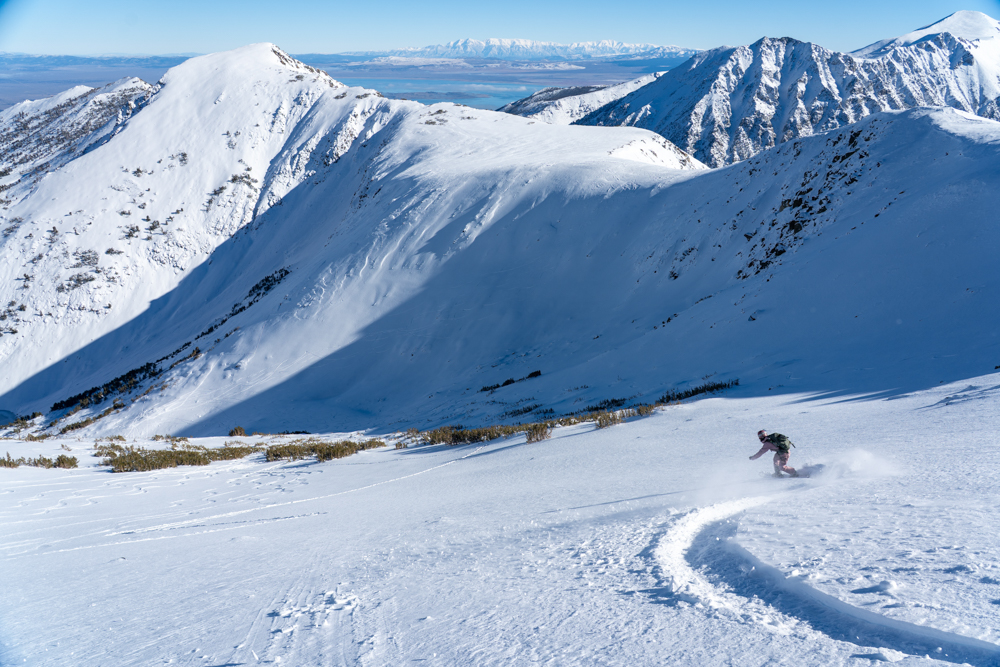
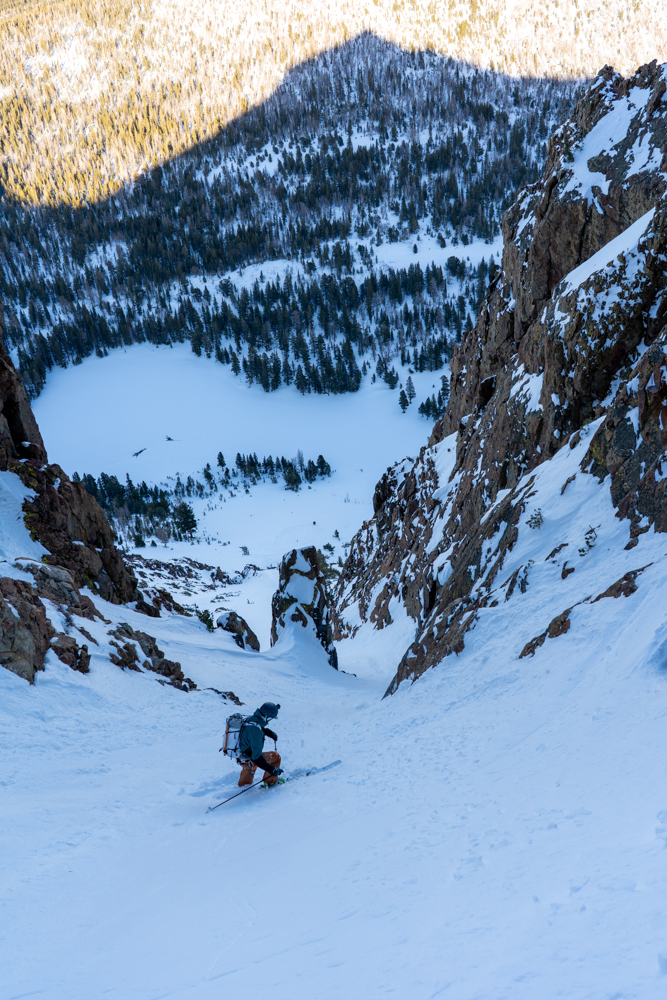
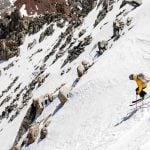
In one accident, I had let a combination of social facilitation and scarcity push me into a more solar aspect partway down the 4,000’ Mendenhall Couloir, triggering a wet loose slide that left me with one ski and one pole above the technical crux of the line. I had been injured earlier that year, and not only wanted to produce good content for sponsors but also wanted to ski aggressively with a few friends whom I hadn’t skied with in several years.
In another close call, I let commitment and a fundamental attribution error (assuming my partner must have had a rationale to continue) trick me into continuing up a line when I noticed the rapid warming. On the descent, we narrowly avoided being taken out when the entire cirque started to shed.

Education and You
Training helps, just not how you think it does
This is not to say that people shouldn’t seek training. Those without training primarily avoid avalanches by abstinence, which is rarely a good practice for skiing good snow. Formal education also provides some protection. Experts are less likely to be fooled by tracks and more willing to speak up if they feel uncomfortable, being less prone to acceptance or the expert halo.
Unfortunately, experts can be even more likely to let familiarity, social facilitation, and commitment push them into greater risk than planned. That said, beginners are likely to just offload the decision-making to those with more training. Additionally, beginners and experts alike seem to be influenced by scarcity, poking a hole in the idea that experts are just seeking better snow.
Awareness of these vulnerabilities does allow us to travel more safely in the mountains, which has been central to the changes in avalanche education. The 2020 data proved that it’s not all the way there yet, though.
For myself, and many others, that education was long in the past. Whether that contributes to these failures in judgment is hard to tell. What we can do, though, is check ourselves and our partners for these flawed ways of thinking. They change daily, just like the snowpack, and if we watch them, we can make safer decisions without sacrificing great days in the mountains.
About the Gear Tester
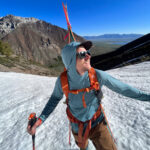
Forrest Smith
Forrest is a long-time gear junkie, with half a decade at Mammoth Mountaineering Supply, a new career as a Mountain Guide, and over a dozen years of backcountry skiing, rock climbing, and backpacking. Forrest is also Dynafits North American “Skimo Hero” competing in skimo race and skiing some of America's steepest descents. Keep up with his adventures on Instagram at @Ski_Smith.
- Forrest Smith
- Forrest Smith
- Forrest Smith
- Forrest Smith
- Forrest Smith
- Forrest Smith