ProView – Edelrid Pinch Review
I can’t say that I have a “favorite” belay device, but I can say that there are a few devices I gravitate to over others. The Edelrid Pinch is quickly becoming one of those devices. I don’t pick favorites when it comes to belay tools because each device has its own strengths and weaknesses, and some work better in certain applications than others. Often, I choose a device based on the terrain I’ll be working in and the rope I’ll be using, so I keep a “quiver” of devices rather than a single go-to.
When the Pinch entered the market, I, along with many others, was skeptical of its novel carabiner-less connection point. At first glance, the interface seemed less secure than a traditional locking carabiner clipped to the device. But once I got my hands on a Pinch and used it a few times, it quickly earned a spot in the quiver.
Edelrid Pinch
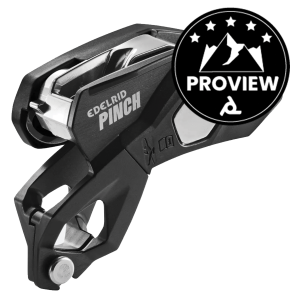
Product Name: Edelrid Pinch
Product Description: Pinch - a new belaying experience with the PINCH, a new, versatile assisted braking belay device for use in sport climbing, multi-pitch climbing and rope access techniques. The PINCH is the first device on the market that can be attached directly to the central ring of the climbing harness.
Offer price: MSRP: $124.95
Currency: USD
-
Quality
(5)
-
Function
(5)
-
Durability
(5)
Summary
The Edelrid Pinch is a newer belay device in the lineup of assisted braking devices. For 35 years the Petzl Grigri has been known as the gold standard for assisted braking belay devices. While Petzl may have set the bar, Edelrid is moving that bar with the introduction of the Pinch. The Pinch is the first assisted braking device that does not need a carabiner to attach it to the belay loop of a harness. While there are a few other more nuanced details, this carabiner-less interface is certainly a big feature that sets this device apart from the others.
Overall
5Pros
- No carabiner needed
- Feeds smoothly, especially with skinnier ropes
- Stays upright on the belay loop
- Adjustable orientation when belaying from above
- Can provide a fixed-point lead belay
- Anti-panic can be turned off
Cons
- Heavy compared to similar devices
- Carabiner-less interface can be tricky to clip and unclip
- Harder to “drop proof” when loading/unloading
- Less smooth on thicker or fuzzy ropes
Performance
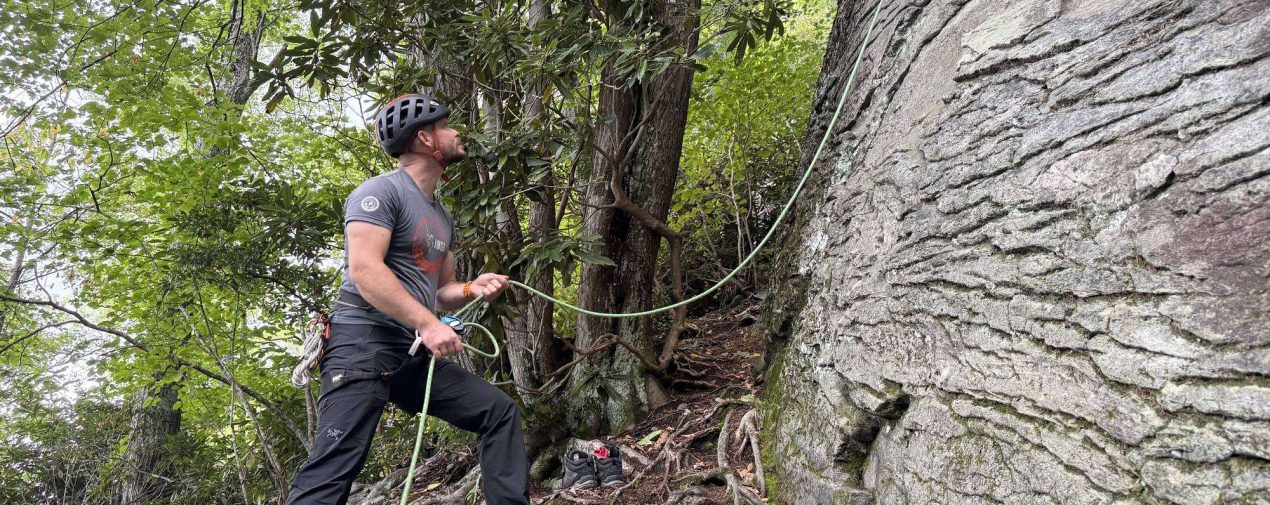
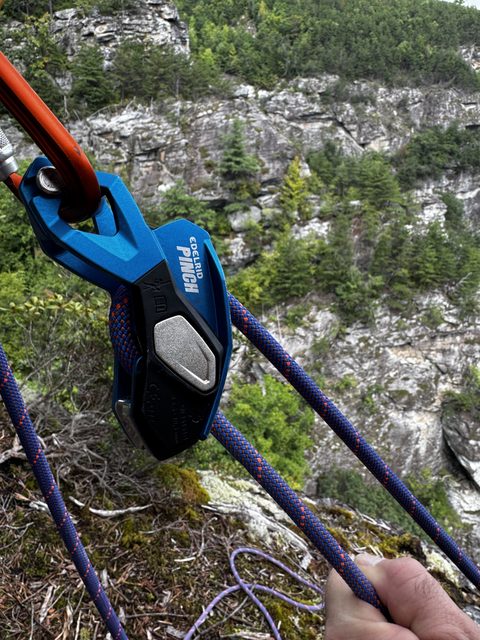
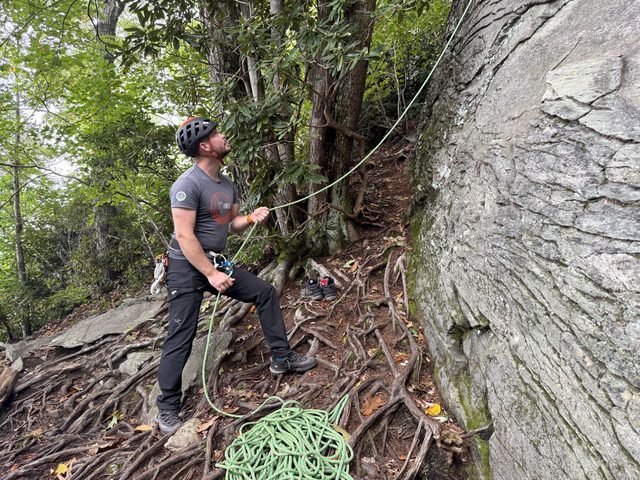
The Pinch performed as expected in most belay situations. Where I find it tricky, and where it takes time to adjust, is belaying a partner from above. It functions much like a Grigri in this application, but loading the device while also trying not to drop it can be a challenge. I’ve picked up a few nuanced tricks to make this easier, though initially I was on the fence about using it for top-belay situations. I’ll get into spring tension more under Features, but it’s worth noting here too: it’s a real performance advantage when paying out slack quickly and smoothly.
Features
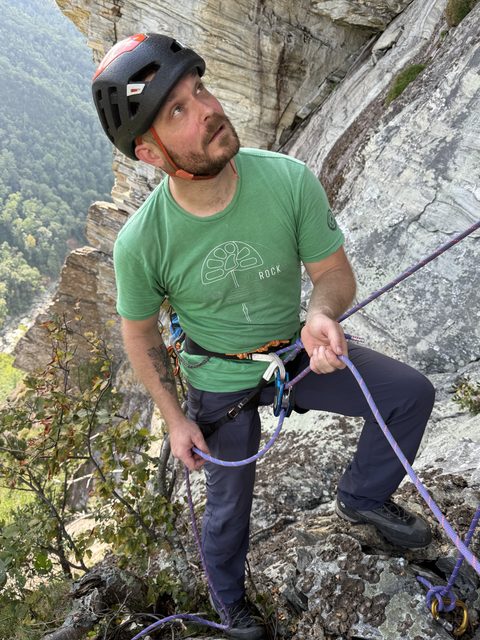
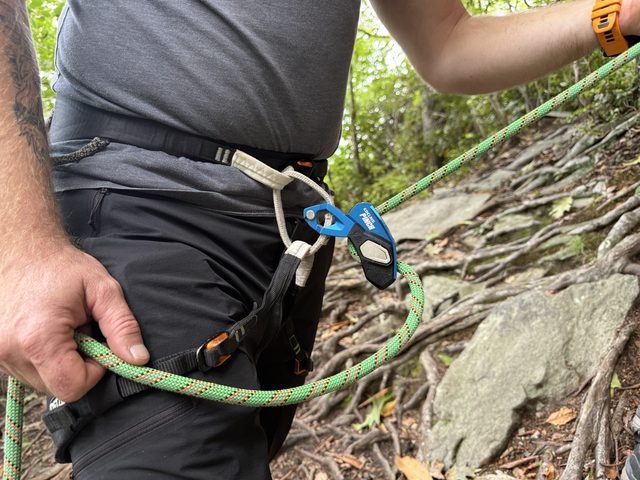
My first impression of the Pinch was that the carabiner-less interface was both great and a little finicky at the same time. The interface does a few things: it lets the device sit closer to the belayer’s body, which makes for a more ergonomic belay when paying out slack, while also preventing the device from twisting sideways or cross-loading a carabiner. It’s also designed so a carabiner can still be clipped to the device if that’s your preference, and there are two ways to do it, either from the side like a Grigri, or at ninety degrees from that point. This is especially useful when belaying from above, since it lets you orient the device however works best. I tend to use the carabiner-less interface when belaying a leader or top-rope belaying from the ground. When belaying from above, I switch to a carabiner. I’ve found that’s the least finicky way to operate the device off the anchor.
The Pinch is designed so the brake strand runs directly out the front of the device, rather than the side, as with most other cam-assisted devices. It takes some getting used to after a Grigri, but it’s a nice detail that keeps the rope in line and cuts down on twisting. That groove is stainless steel, so it holds up to wear much better than devices built with aluminum. The Pinch also runs slightly more spring tension than other devices, which makes for a smoother feed when paying out slack quickly, though rope diameter plays a role here too: the thicker the rope, the less smooth the feed.
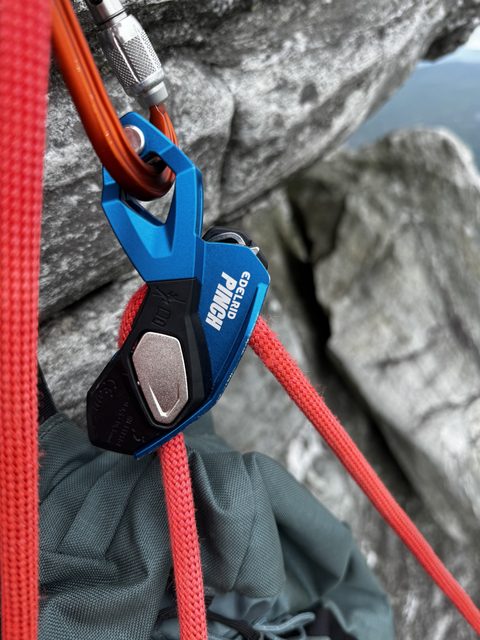
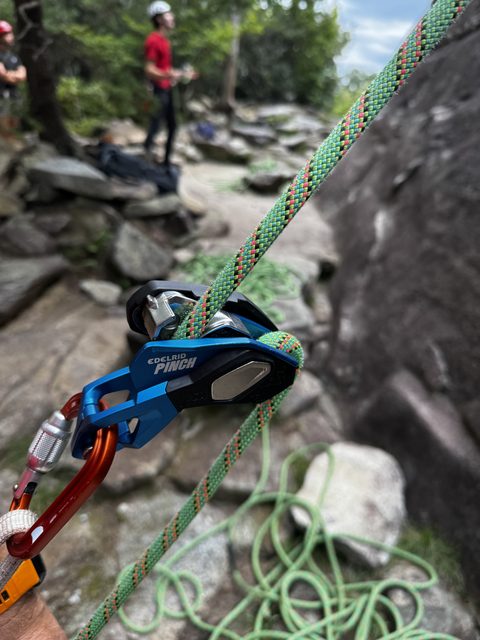
One of the more nuanced features is that the Pinch can be used for a “fixed-point lead belay.” Essentially, the device clips directly to the anchor to provide a lead belay in situations with hard climbing right off the anchor and no gear available. This is usually done with either a munter hitch or a tube-style belay plate. Both work fine, but having the added security of an assisted-braking device is nice for extra peace of mind. If you’re unfamiliar with a fixed-point lead belay, I’d suggest hiring a guide to learn the system properly. Edelrid also has a multipitch tutorial video that demonstrates using the Pinch for a fixed-point lead belay.
Lastly, the device has an anti-panic feature that can be “turned off” by installing a small threaded pin into the handle. I’m not a big fan of anti-panic on devices, so I went ahead and installed the pin as soon as I got the device. Some people love anti-panic, so it’s nice that you have both options built into one device.
The Final Word
After 20-plus days using the Pinch, I think it holds up well in both single-pitch cragging and multipitch trad settings. It would also make a solid device for the gym. That said, it shines most in single-pitch settings and takes some adjustment if you want to bring it out on multipitch days. Overall, this is a great belay device, and I’ll keep reaching for it, both on guiding days and when I’m out climbing for myself. The Pinch is a genuinely novel device with a level of innovation that’s hard to find in newer belay tools these days.
Shop the Edelrid on Outdoor Prolink. Not a member? Apply today
See other Edelrid reviews
About the Gear Tester
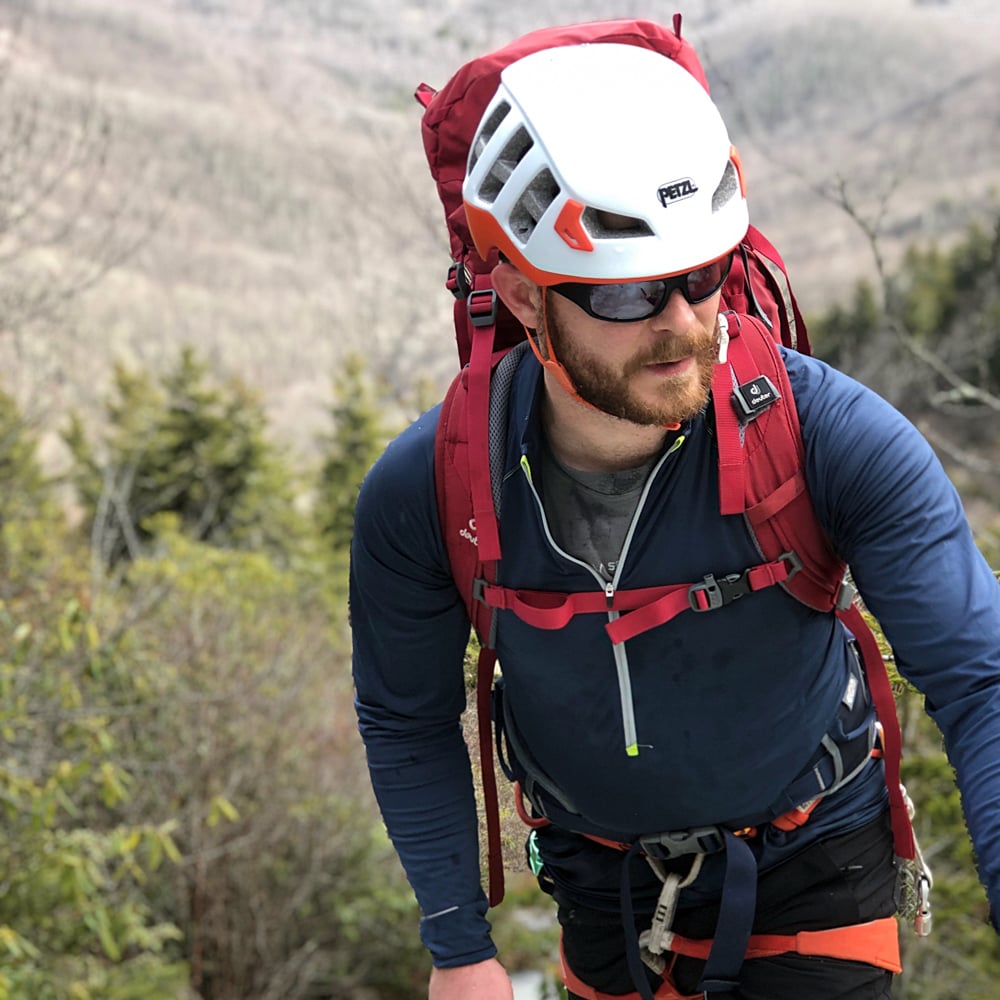
Forrest Stavish
Forrest has worked as a climbing guide and instructor since 2012 and currently works for Fox Mountain Guides in Western North Carolina. He started climbing in 2005 on the gneiss boulders of Rumbling Bald in Lake Lure, North Carolina and roped up for the first time on the metasandstone of Table Rock in the Linville Gorge. Since then he has gone on to climb Mount Rainier, Mount Shuksan, and Forbidden Peak in the North Cascades. He has also made trips to climb in Red Rock outside of Las Vegas and numerous trips to closer destinations such as the Tennessee Wall in Chattanooga and the New River Gorge in West Virginia. Climbing is Forrest’s primary sport, but he also enjoys skiing, mountain biking, and trail running. You can follow him on Instagram at @forreststavish.
- Forrest Stavish
- Forrest Stavish

- Forrest Stavish
- Forrest Stavish
- Forrest Stavish
- Forrest Stavish