
A Guide to Outdoor Adventures With Your Canine Companion
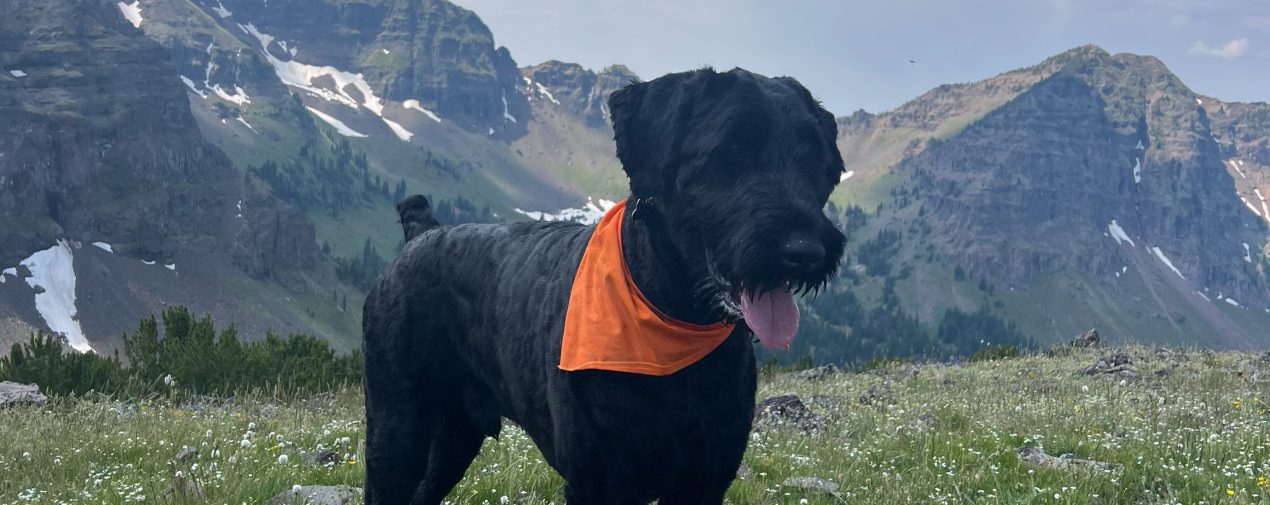
All too often, I found myself trail running, mountain biking, or skiing solo. Aligning schedules with friends could be tricky, or I’d head out on a last-minute adventure. Then came the perfect trail buddy – always ready, never complaining, and even carrying his own gear. Exploring the outdoors with my dog has been fun, memorable, and deeply rewarding – but it does require preparation. This guide covers ethics, preparation, favorite activities, gear, and tips for adventuring with your four-legged companion.
First and Foremost: Know the Regulations
Bringing your dog into the backcountry comes with responsibility. Not all public lands allow dogs, and rules around leashes and seasonal closures vary. Your dog should have a reliable recall, avoid chasing wildlife, and follow leash requirements to protect wildlife and other trail users. Always pack out waste to keep trails clean.
When in doubt, leave your dog at home. Fragile desert landscapes, wildlife refuges, or situations where your dog would be left alone are generally not appropriate. Being thoughtful about where and how you recreate keeps wild places safe and ensures dogs remain welcome outdoors.
Preparing Fido
Not every dog is ready for long days outside without preparation. Once my dog was old enough for longer mileage, we started with neighborhood strolls, gradually increasing distance and trail complexity. Training focused on recall, wildlife neutrality, and calm interactions with other dogs and people.
Exploring local trails exposed him to shale, mud, creeks, and logs, building confidence and toughening paw pads. This progression ensured he was ready for longer adventures without creating unnecessary risk.

Best Outdoor Activities for Adventure Dogs
Choosing the right activities often depends on your dog’s breed, size, coat, and temperament – even for mixed-breed dogs. Some dogs naturally enjoy certain environments or activities more than others, just like people!
Hiking & Trail Running
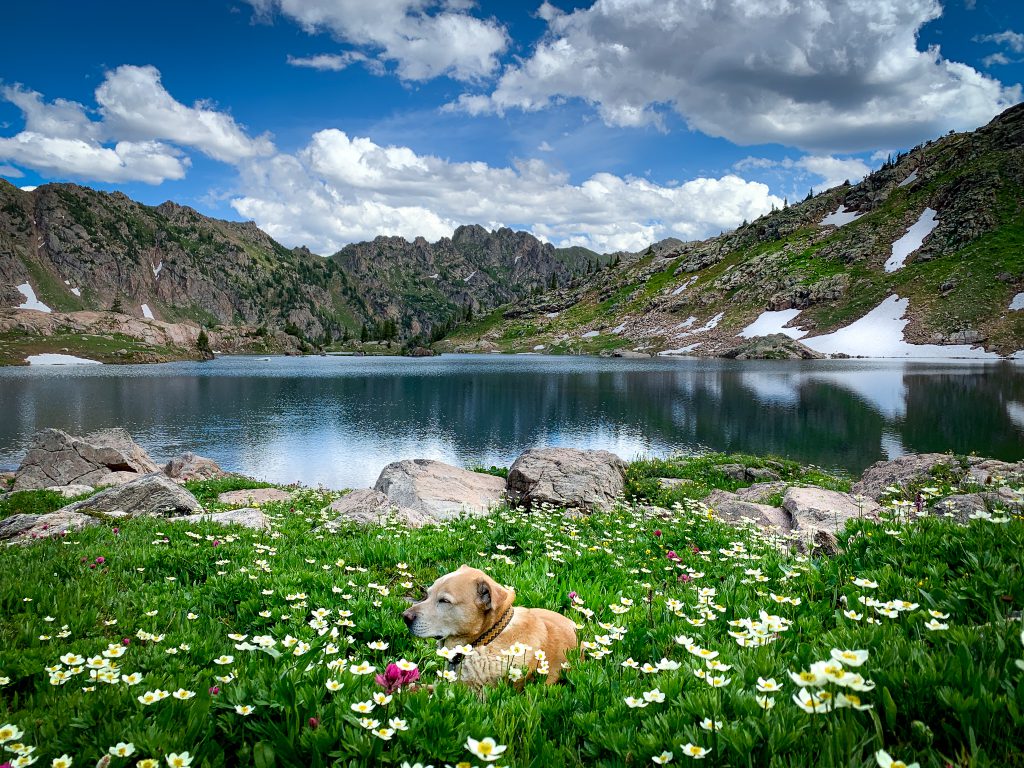
The quintessential adventure dog activity, hiking is the gateway to almost everything else. One of the things I love most about hiking with my dog is the flexibility – it can be a quick lunchtime walk or a full day chasing a summit. When planning a hike together, I always consider trail length, temperature, access to water, and what we might encounter along the way, like wildlife, livestock, or busy trailheads. Starting with shorter, local hikes is the best way to learn how your dog behaves on the trail and what types of terrain suit them best. Once my dog got older and built more endurance, we started trail running together too. Just remember to always make time for plenty of sniff breaks.
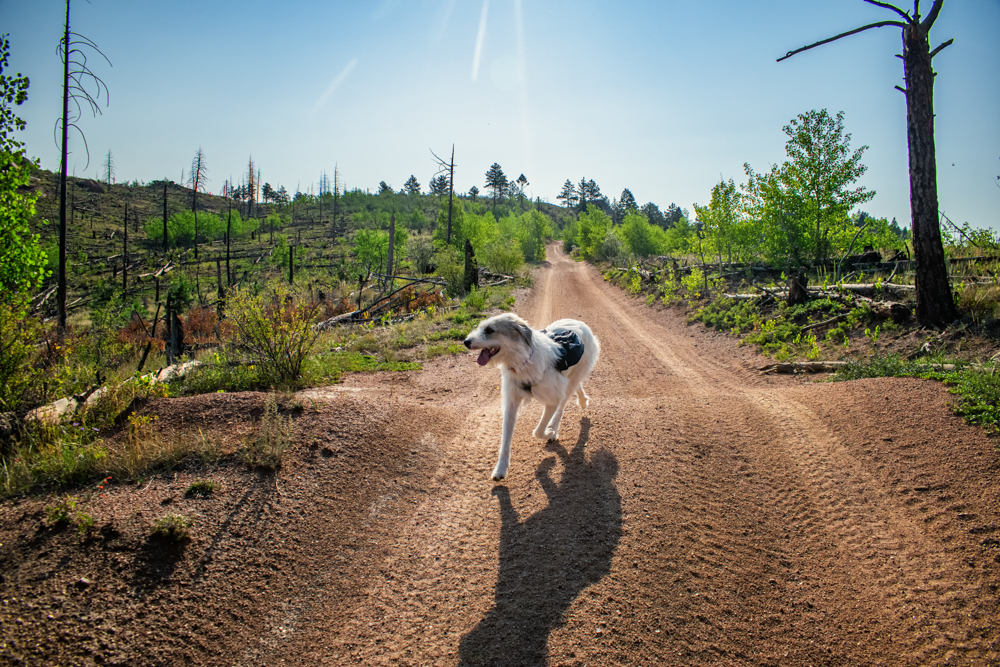
Pro tip: Closed forest roads are perfect for dogs – wide, quiet, and low-traffic.
Camping & Backpacking
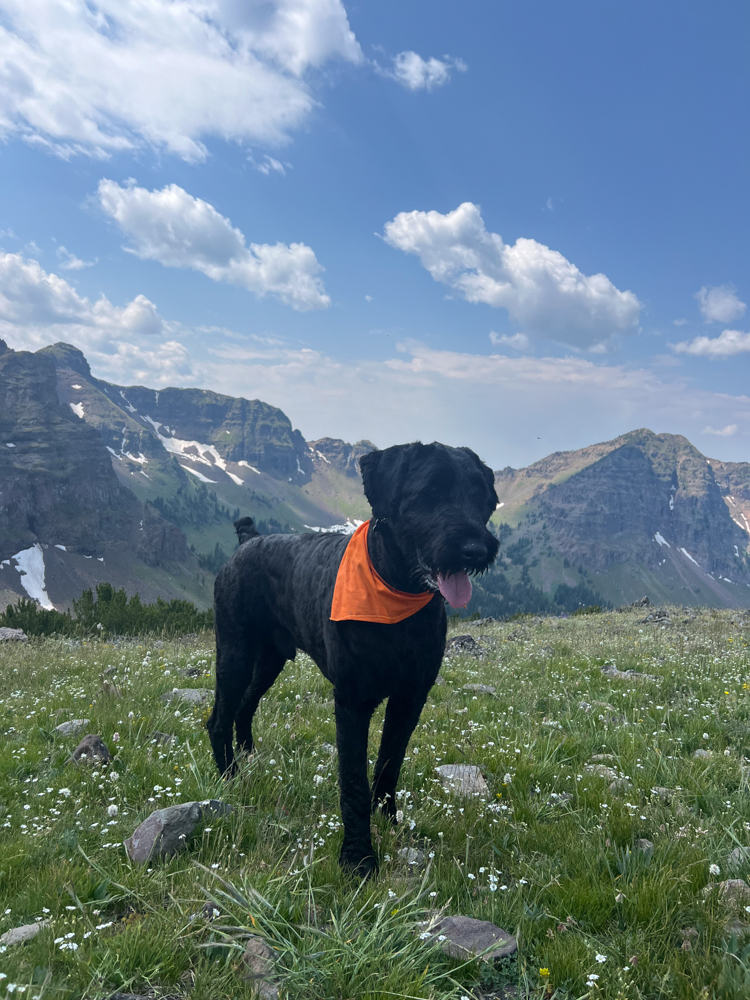
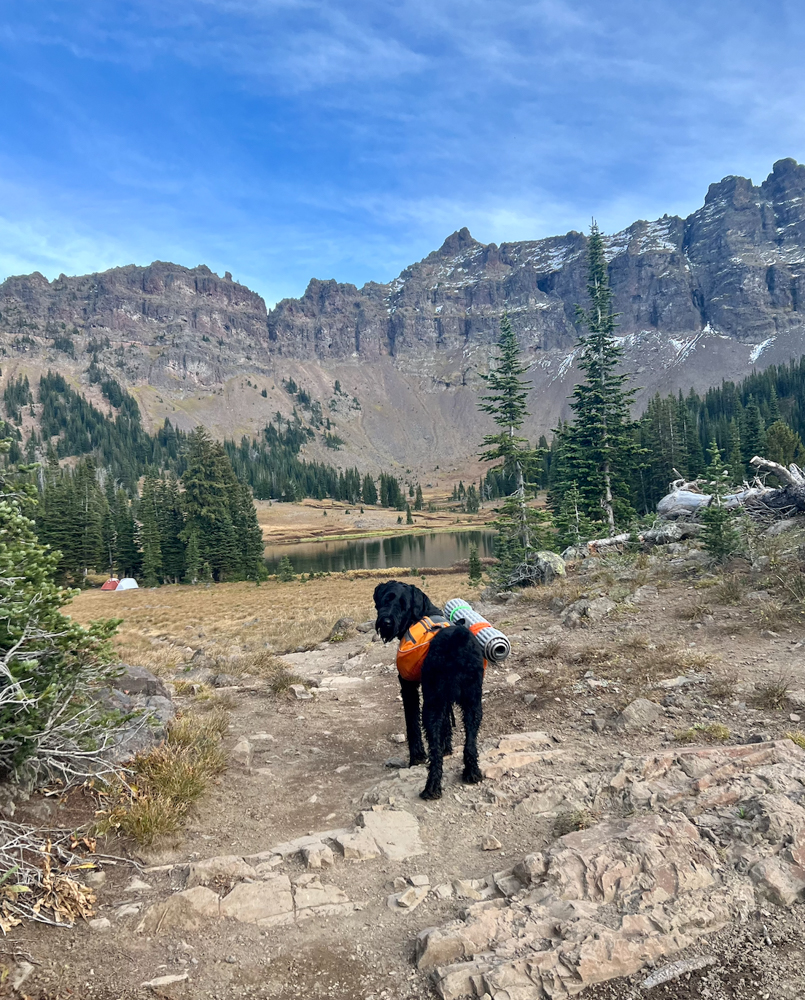
Long gone are the days of finding a pet sitter for camping trips. If you’re staying at a campground, always check whether dogs are allowed and if they need to be leashed. Campgrounds can also be full of unfamiliar sounds, which is something to keep in mind for sensitive dogs. Backpacking takes more preparation, but it’s become one of our favorite adventures together. For my dog Ranger’s first trip, we chose a trail he already knew, with well-spaced campsites, reliable water, and minimal wildlife.
It’s important to consider how your dog will sleep too and if they will need a pad or blanket. Most dogs can comfortably carry about 10-15% of their body weight, but it’s best to practice around the neighborhood first so they get used to the pack and weight.
Pro tip: Cut down a Z-fold sleeping pad for a cozy dog bed.
Mountain Biking
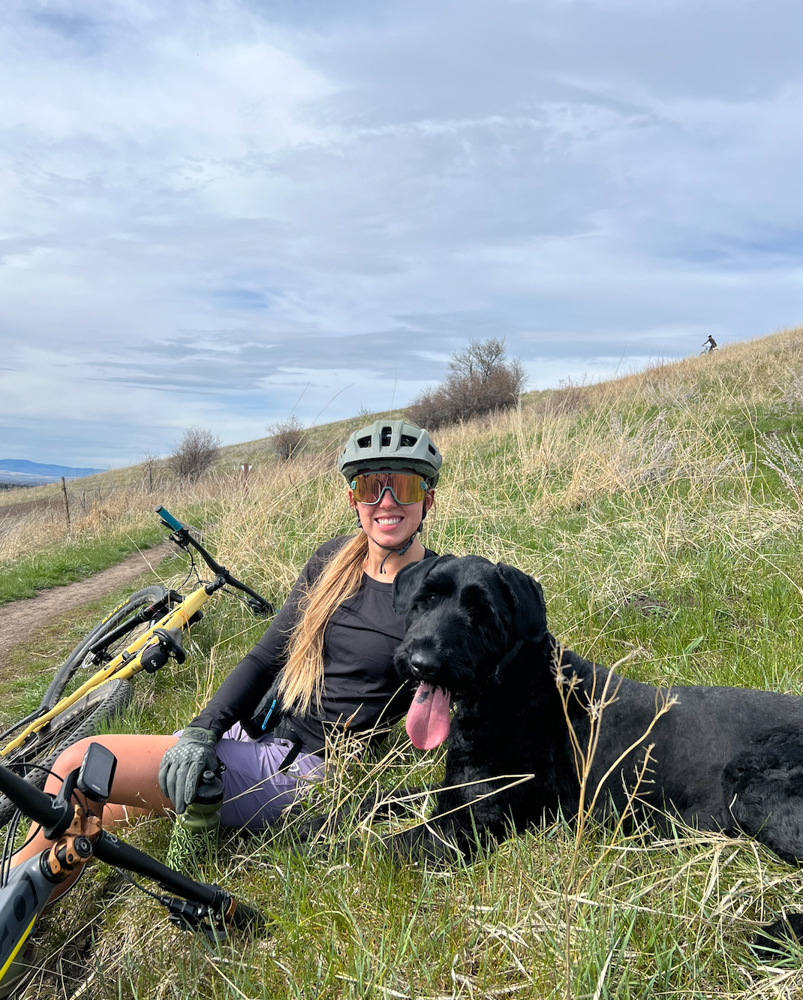
While biking with your dog can be incredibly fun, it does take some getting used to for everyone. Start slow on quiet and wide trails. Teach commands like “move” to prevent your dog from drifting in front of the bike. Gradually increase distance and difficulty. The uphill grind gives your dog a great chance to sniff while you huff and puff. While downhills might feel easy and fast for you, remember your dog is running extra hard!
Pro Tip: Remember to pack extra water while biking!
Backcountry Skiing
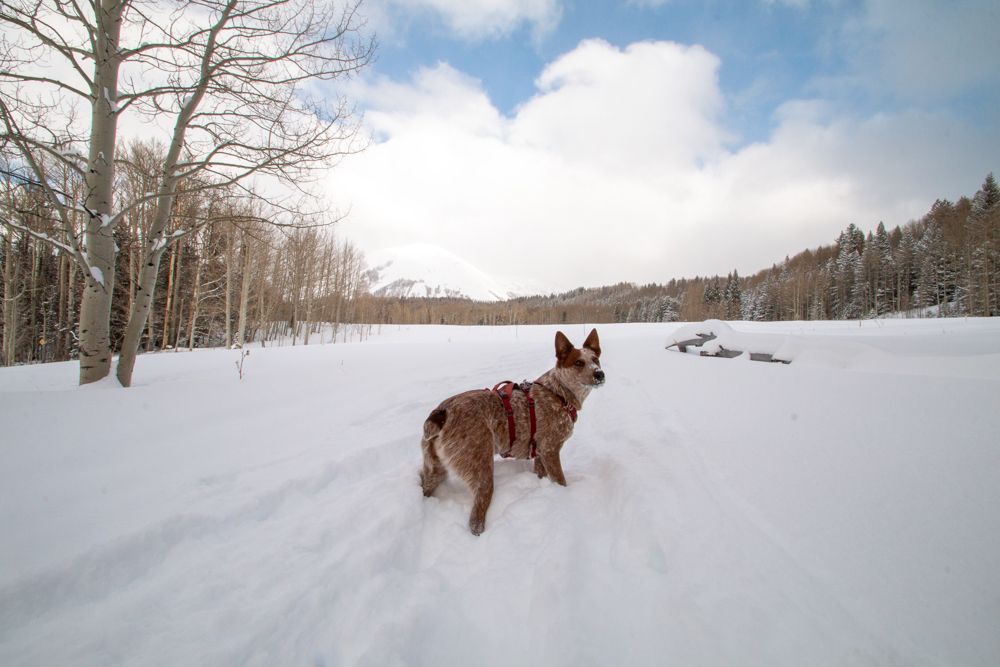
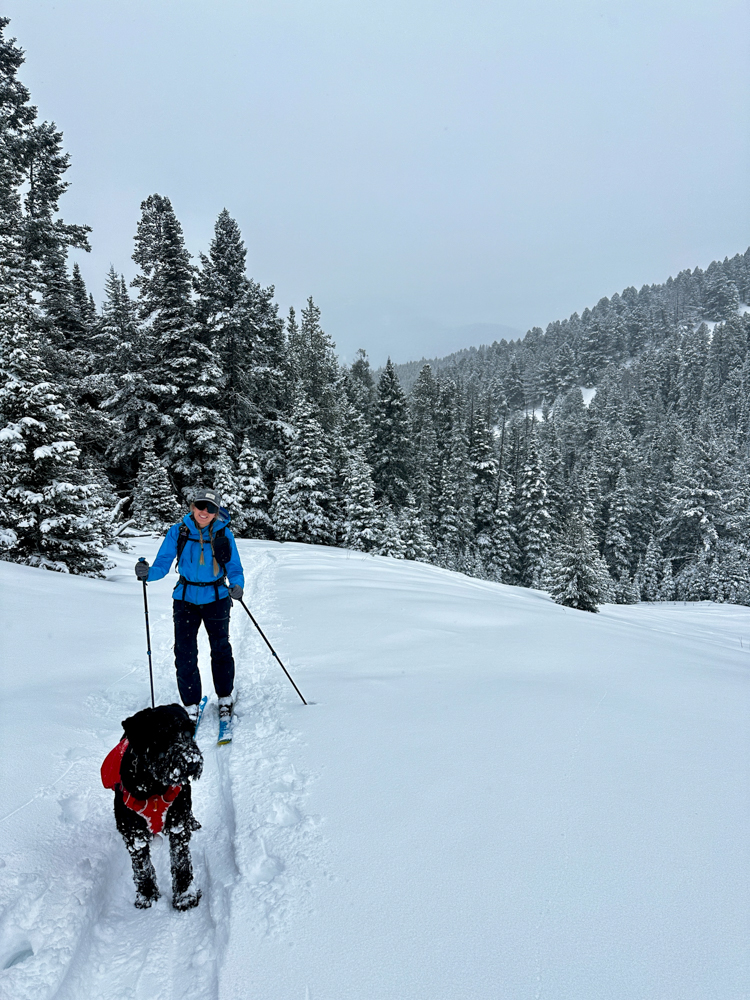
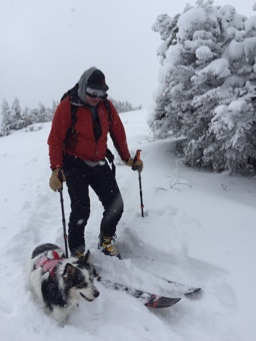
Winter energy can be tough to burn on walks. Backcountry skiing offers a great solution. Like biking, the extra gear takes some time to get used to, but with some practice your pup will start getting excited when they see the skins come off. Start on mellow forest roads to introduce your dog to skis safely. Watch for avalanche risk, snow depth, and cold, and check paws frequently. Some dogs benefit from booties; we prefer paw wax
Gear Guide
The right gear makes adventures safer and more enjoyable. Essentials include:
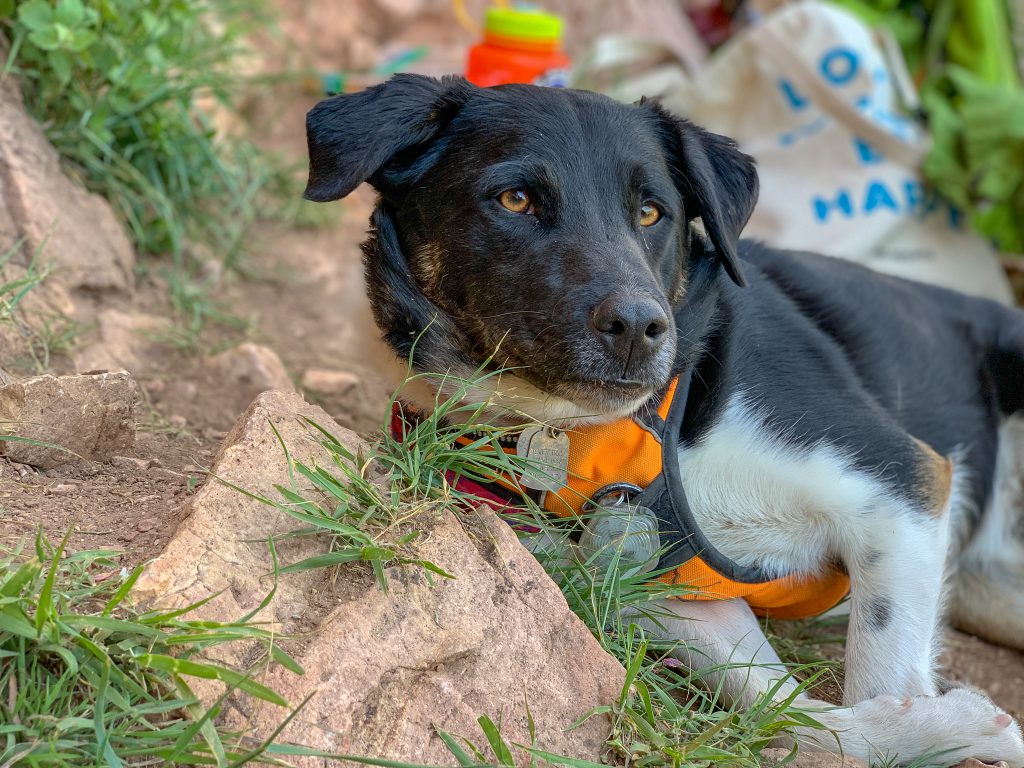
- Collar or harness with ID tags
- Leash (I love a bungee leash with a traffic handle)
- GPS/tracking collar if your dog ranges far
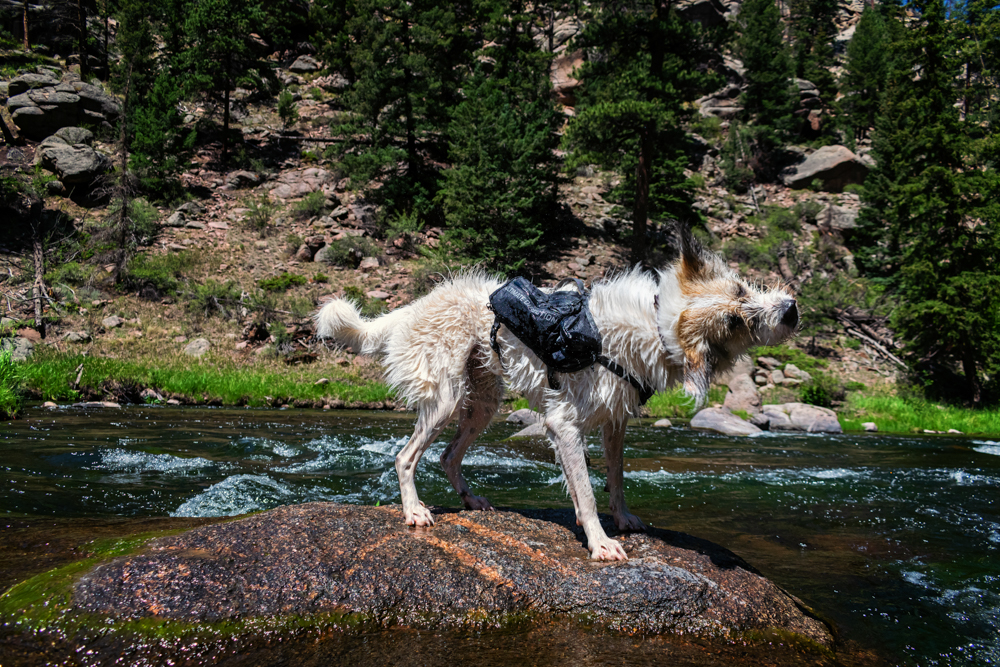
- Dog backpack or vest
- Treats, collapsible bowl, and hydration pouch
- Booties or paw wax for rough terrain
- Insulated sleeping pad and dog-specific first aid kit
Giving your dog a “job” with a pack or vest can make trips more engaging and comfortable.
Helpful Tips
- Start early or head out in the evening to avoid crowds and heat
- Bring extra water for your dog
- Watch for exhaustion — it’s okay to turn back early
- Check paws frequently for scrapes or debris
- Be aware of wildlife hazards like rattlesnakes, bears, and porcupines
- Ensure reliable recall before off-leash adventures
- Know when to leave your dog at home – not every trail or activity is suitable
About the Gear Tester