
ProView – Contour Guide Pure 2.0 Splitboard Skin Review
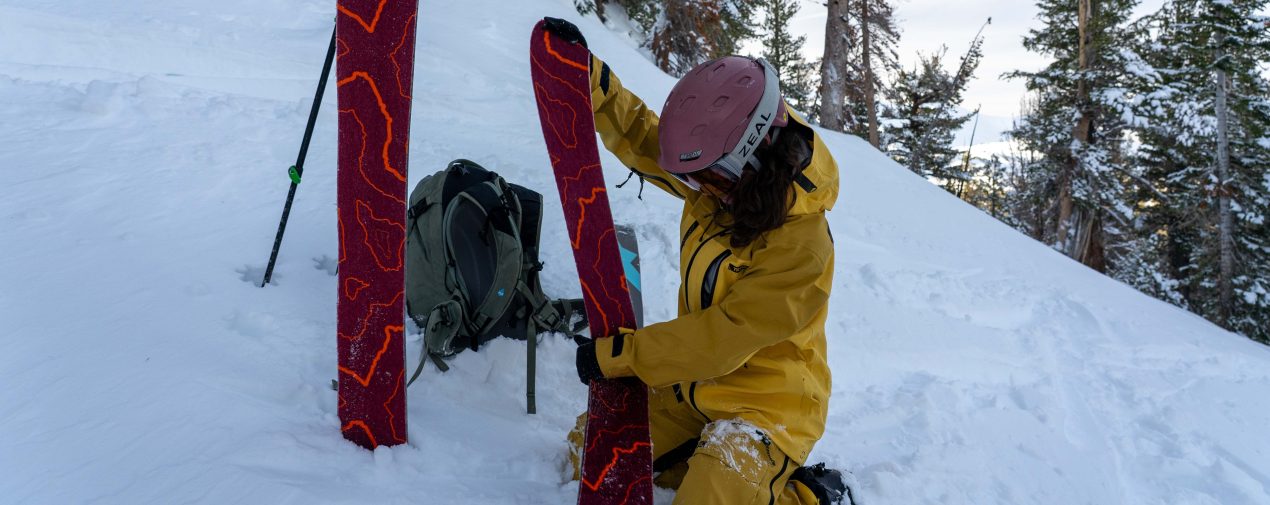
Skins can make or break any day in the backcountry. When your skin doesn’t stick or your tail clip fails, a good day of riding can turn into a sidestepping, tele-boarding nightmare. I tested the Contour Guide Pure Splitboard Skins over several weeks of touring in the eastern Sierra, putting them to work breaking trail in deep powder, on firm sidehilling skin tracks, and everything in between. I paired these skins with my Jones Solution 146 splitboard, my typical daily driver. The initial learning curve for these skins was steeper than expected, but overall, they proved to be a solid pair of skins for mountain travel, offering good grip, respectable glide, and high-quality construction.
Contour Guide Pure 2.0 Splitboard Skin
Product Name: Contour Guide Pure 2.0 Splitboard Skin
Product Description: With proven hotmelt adhesive technology for reliable grip – even after multiple applications in the most demanding conditions. The adhesive skin made of 100% mohair delivers outstanding glide performance.
Offer price: MSRP: $260.00
Currency: USD
-
Quality
(5)
-
Adjustability
(5)
-
Features
(3)
-
Durability
(4)
-
Grip
(4)
-
Glide
(3.5)
Summary
All in all, the Contour Guide Pure Splitboard skin is a dependable choice for the beginner through advanced splitboarder. While its unique Velcro tip clip situation requires some getting used to, it does an excellent job of solving the problem of insecure tail clips. The skin offers a good combination of glide and grip, and has a high-quality feel. For boards that traditional tail clips don’t fit well, or for riders who can’t find skins that fit, you can’t go wrong with the Guide Pure.
Overall
4.1Pros
- Velcro tip clip design stays very secure while skinning
- Reasonable glide and good grip profile make this skin a good choice for beginner through advanced splitboarders
- Universal fit should fit nearly any size splitboard (including my very tiny 146 splitboard)
Cons
- It’s possible to lose your tip clip in deep snow when transitioning
- I have concerns about the long-term durability of the Velcro attached to the tip clip
- Tail-to-tip skin application was slightly annoying and made it much harder to line up the skin on the splitboard when transitioning
Grip vs. Glide
The Contour Guide Pure Splitboard skins feature 100% mohair plush, designed to offer excellent gliding efficiency. Typically, full mohair skins are as glide-y as they get, made from the hair of Angora goats. When I first used these skins, I was surprised at how grippy they felt. On my first tour using them, they felt like they hugged the snow surface, offering little-to-no-glide as I pushed my splitboard uphill. I was skeptical at first, but knowing that skins take time to break in, I put more and more days on them to see how quickly I could unlock their glide potential: quick 2,000-foot laps up our local tree runs before work, 6,000-foot storm touring days, and a handful of days in the alpine.
Slowly but surely, they began to break in, and glide improved significantly. Still, once broken in with around 25,000 feet of vertical gain, I found that the Contour Guide Pure Splitboard still offered substantially less glide than my daily drivers, the Pomoca Free Pro Splitboard Skin (which I have many more days on). Still, I think they stand to offer more gliding potential as I continue to use them, given their full mohair plush (which usually glides better than nylon and nylon/mohair blends).
Glue
The Contour Guide Pure Splitboard skins use a hot-melt adhesive technology. As a result, they’re relatively difficult to pull apart, especially when compared to Contour’s hybrid adhesive. I found myself pulling them apart piece-by-piece, sticking my thumb in, and pulling apart a small section at a time.
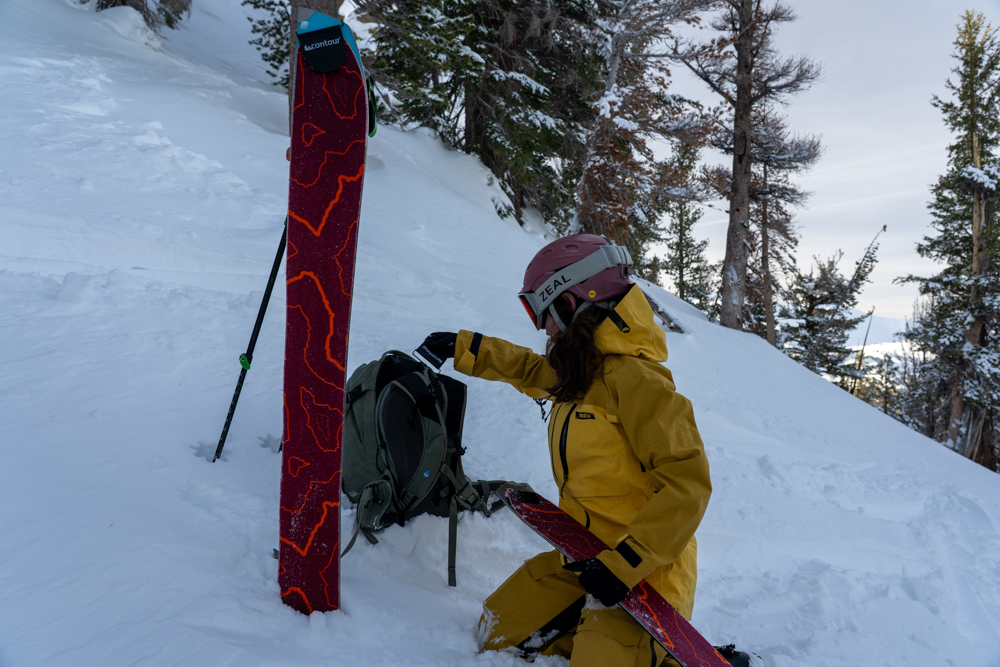
Trying to rip them in one go felt nearly impossible until a few transitions into a tour. All told, however, the glue stuck to the base of my splitboard plenty well over the course of a long day with multiple transitions. Still, although I rubbed the plush and glue down as well as I could before starting each tour, the edges around the nose of my board peeled up a bit, exposing the glue to picking up snow during my ascent. I think that cutting the sides of the skin in a slightly more rounded fashion would help prevent them from peeling in this way.
A note on skin care: remember to store these skins in a dry, cool place to avoid issues with your glue over time. And if they start to feel like they’ve lost their stick, you can try re-gluing them to extend their lifetime.
Features & Ease of Use
Contour went out on a limb with its unique Velcro tip clip design on this skin. Most traditional splitboard skins use a static, permanently fixed tip clip and an elastic-attached tail clip that you stretch and pull over the tail of your board. Fortunately or unfortunately, splitboards of the modern era come in all types of shapes and sizes, meaning that many stock tail clips (like the one that comes on the Pomoca Free Pro Splitboard skins) don’t fit well with the shape of board tails. Brands like Jones and Weston have worked to fix this issue by offering a notched skin attachment system that works with their branded skins, but if you want perfect compatibility, you need to buy skins and a splitboard from the same company. As a result, you get less flexibility and choice over the type of skins you can buy.
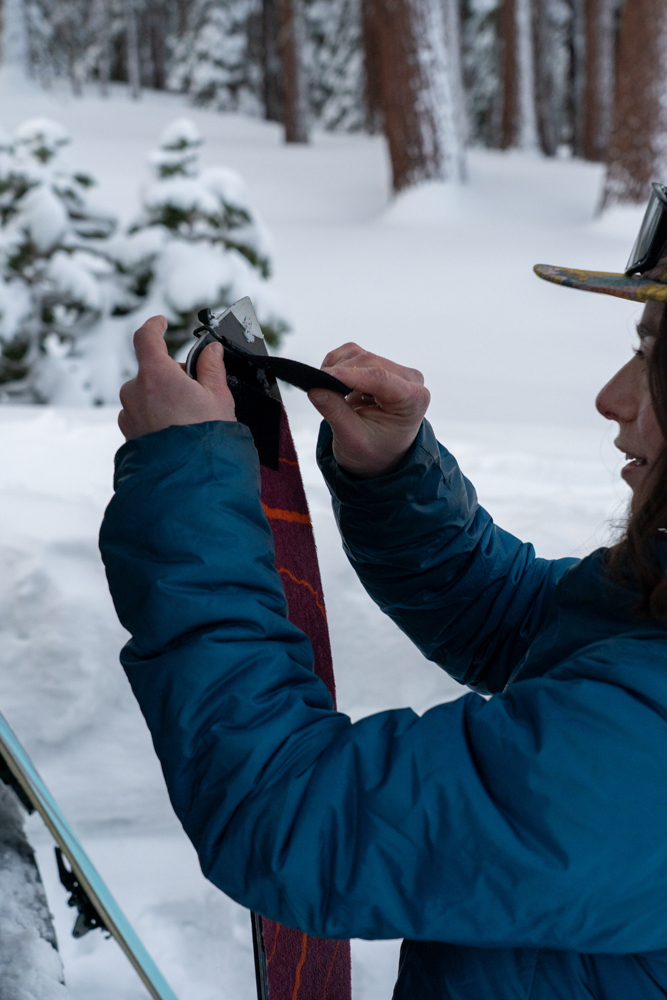
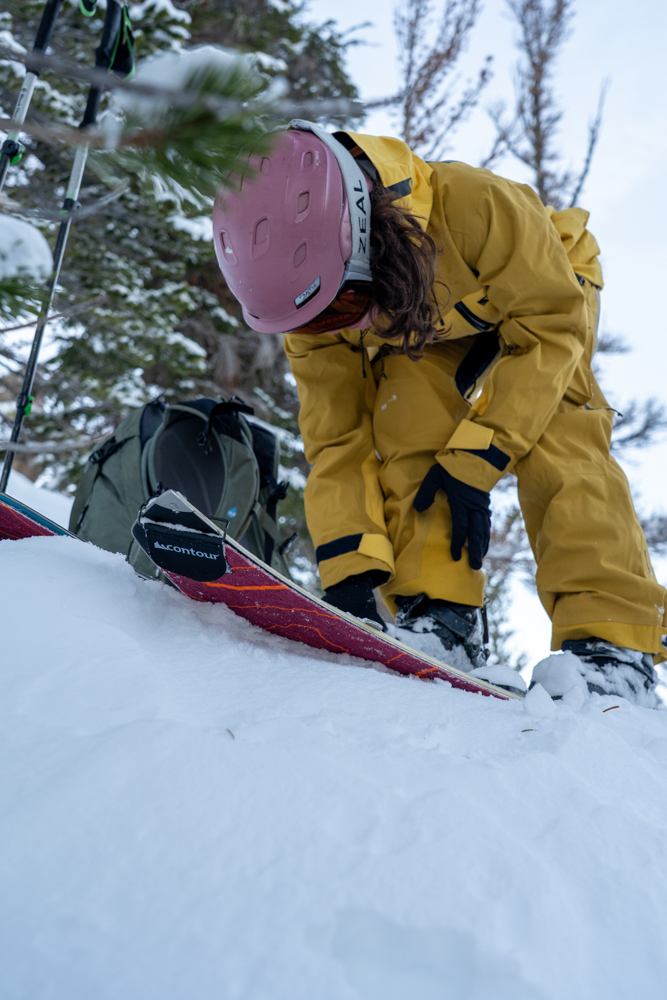
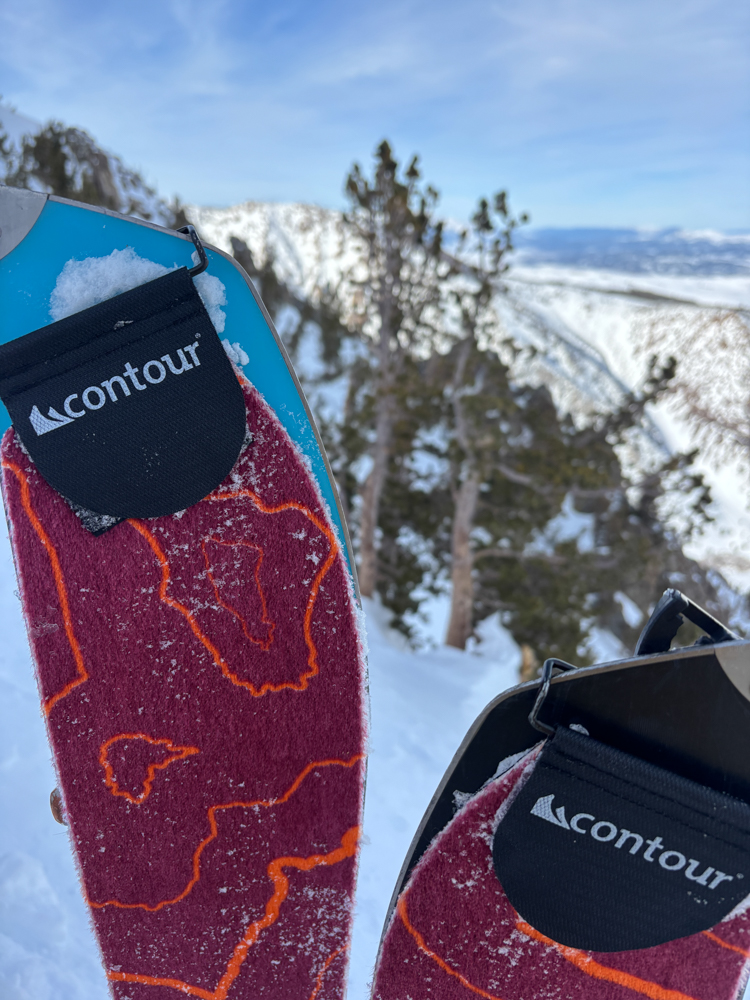
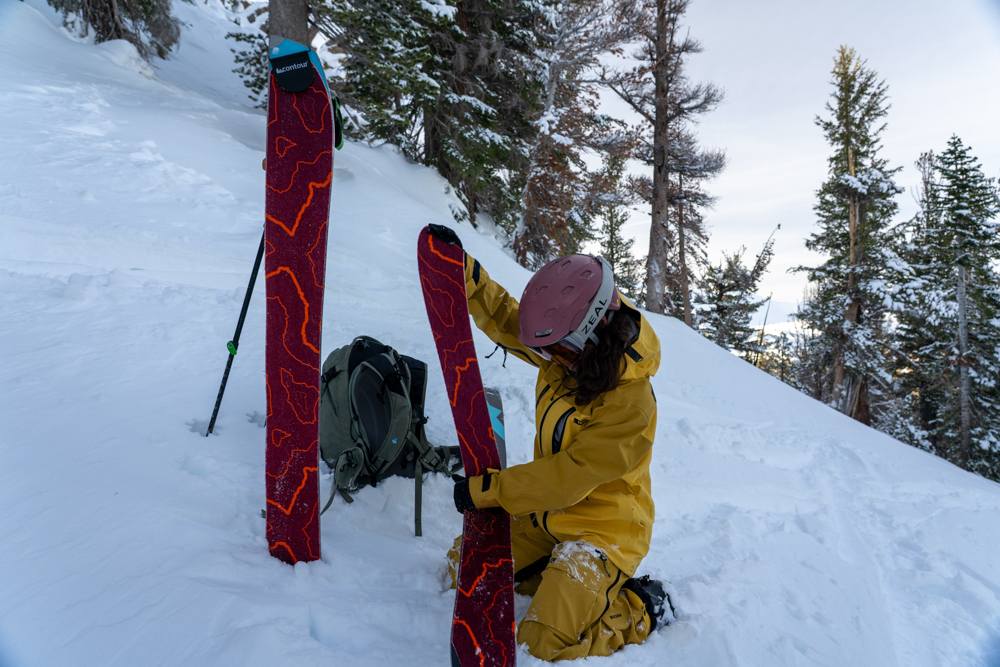
I appreciated that Contour came up with a system that addresses this issue: a detachable, Velcro piece attached to the tip clip, combined with a fixed tail clip. Both the tip and tail clips are static, metal pieces (rather than a traditional, elastic piece attached to the tail clip) that fit securely over my tip and tail. To put on your skins, you remove the Velcro (attached to the tip clip), put the skin on starting at the tail of your board, and then toss the Velcro-attached clip over your board tip. Notably, when applying the skins to your board, you put them on tail to tip, rather than tip to tail.
Personally, I found the system slightly clunkier to use than a traditional one, taking an extra minute or so during transitions. I also had trouble peeling the Velcro off the skin without taking my gloves off, which was a bit unfortunate in cold conditions. The tail-to-tip application system made it slightly more difficult for me to line up the skin with the board, but I’m sure that over time, the motion becomes more natural and intuitive. Still, the skins remained ultra-secure on my board while traveling uphill. Also, it’s nearly impossible for your tail clip to fall off, which is a major plus. The beauty of the tip and tail attachment system means that even if your glue starts to degrade, your skin remains attached to your board with good security.
Unfortunately, while using these skins, I worried about losing my Velcro-attached tip clip in the snow during transitions. Since you fully remove it from your board every time you take your skins off, I felt concerned that I would leave it behind at a transition spot. Luckily, I never left it behind while testing these skins, but I did find it to be a notable downside of the system. I also wondered about the possibility of the Velcro clogging up with snow, rendering the tip clip unusable. It never happened during testing, but I’m curious how it will hold up as I approach 50 days on the skins.
Adjustability & Sizing
One of my favorite things about the Contour Guide Pure Splitboard Skins is their impressive sizing adjustability. As a small splitboarder, I often have trouble finding skins that perfectly fit my boards. When I was sent these skins to test, I was worried about the so-called “universal” sizing. It turns out, they truly are universal. Smaller riders will have to do a good bit of trimming, but I was pleased to see that they were relatively easy to adjust down to my very small board size. In this regard, Contour’s Velcro attachment system is a major plus, offering maximum sizing adjustability for boards of all sizes and shapes.
Durability & Quality
Although I’ve yet to stack fifty days on these skins, they held up well during testing in the eastern Sierra. The glue is ultra-sticky, and I imagine that it will continue to stay that way for many, many days on the skin track in the future. The stitching on the tail clip seemed secure, and because you don’t ever pull on it, the skins are much less likely to fail at the stitching (I’ve ripped the stitching on many tail clips in the past from pulling on the elastic attachment piece).
Although the skin is made of full mohair, typically regarded as less durable than nylon, I managed to avoid core-shotting the skins while stepping on rocks on wind-stripped Sierra ridges. Additionally, the tip clip Velcro stayed securely in place throughout the testing period and never got clogged. Still, I had some concerns about the long-term durability of the unique Velcro tip clip, and I’m curious to see how it holds up to longer-term testing.
The Final Word
All in all, the Contour Guide Pure Splitboard skin is a dependable choice for the beginner through advanced splitboarder. While its unique Velcro tip clip situation requires some getting used to, it does an excellent job of solving the problem of insecure tail clips. The skin offers a good combination of glide and grip, and has a high-quality feel. For boards that traditional tail clips don’t fit well, or for riders who can’t find skins that fit, you can’t go wrong with the Guide Pure.
Shop Contour on Outdoor Prolink. Not a member? Apply today!
See other Contour Gear reviews
About the Gear Tester

Jackie Florman
Jackie is a backpacking guide at Lasting Adventures Guide Service in Yosemite National Park, CA. She also works on a snow hydrology field research team, writes for HikingDaily.com, and is currently writing a thesis in Environmental Studies at the University of Colorado, Boulder. She loves splitboarding, scrambling, and rambling around in the Eastern Sierra and the Colorado Rockies. Follow her adventures on instagram @jackieeflor.
- Jackie Florman

- Jackie Florman
- Jackie Florman

- Jackie Florman

- Jackie Florman

- Jackie Florman

- Jackie Florman

- Jackie Florman

- Jackie Florman

- Jackie Florman

- Jackie Florman

- Jackie Florman
- Jackie Florman
- Jackie Florman

- Jackie Florman
- Jackie Florman