ProView – AKU Outdoor Aurai DFS EVO GTX Review
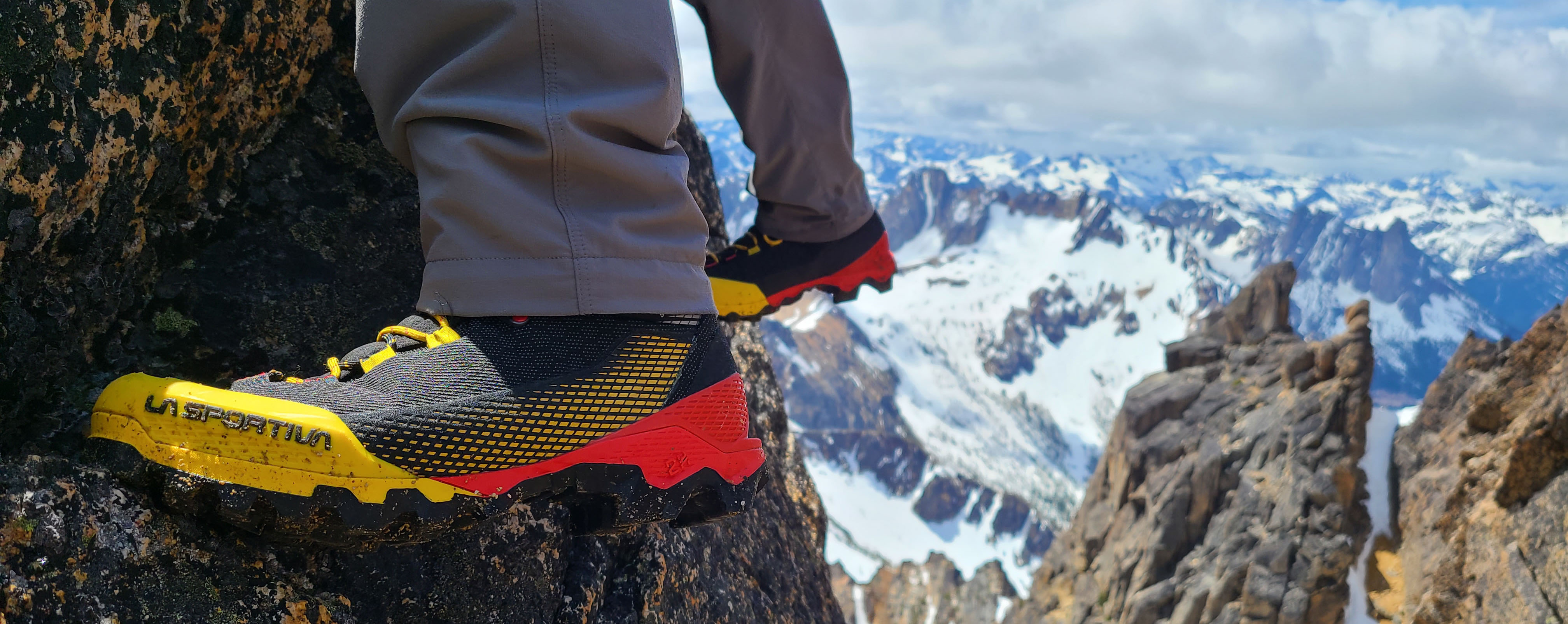
After being introduced to AKU boots this previous winter through a review I did of their Hayatsuki boots, I began to look deeper into a brand that I knew little about. I quickly saw their Aurai DFS boots, and as a consummate gear nerd I began to deeply covet them. A well-timed proposal to review the boots coincided with AKU releasing an updated “Evo” model of the Aurai, and I was excited to receive one of the early pairs for testing. With my climbing partner and I moving out to the PNW this spring to train for longer term climbing goals I was able to get these boots on to the frozen volcanoes of my home region and really put them through the paces. Hopefully, my early efforts in these boots will help introduce you to the Aurai Evo from AKU and lead you to seriously consider them for your next boot purchase.
AKU Outdoor Aurai DFS EVO
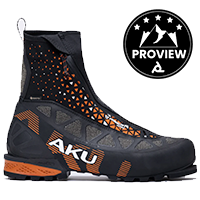
Product Name: AKU Outdoor Aurai DFS EVO
Product Description: The ultimate lightweight mountaineering boot, engineered for total confidence on technical ice and rock.
Offer price: MSRP: $700.00
Currency: USD
-
Quality
(5)
-
Features
(5)
-
Fit
(5)
-
Durability
(5)
Summary
If you are looking for a boot that can do it all; keep you warm and dry, comfortably loose yet capable of precise tightness, stable and secure for your crampons, you may have just found it from a company that will deliver it in a well made, durable, aesthetically pleasing, and “affordable” package. What’s not to like?
Overall
5Pros
- Wide forefoot
- Good tensioning system
- Deep crampon lugs
- Effective gaiter
- Warm insulation
Cons
- Retains moisture in hot environments (expected)
Fit
For many of you coming to this review the biggest question for any boot is, “will it fit me?”. In the world of online shopping and dwindling (yet critically important) brick and mortar stores, finding out if a product will work for you is always important before you fork over your cash for it. Recommending a boot to each individual is a bit tricky because feet vary so much between us all, but I will try to give you some helpful statistics on the Aurai DFS Evo that will inform your decision. Personally I have pretty wide feet, especially around the 5th metatarsal, and tend to wear 42.5 EU for my “comfort” size, and 42 EU for my “performance” size. This runs pretty standard across all categories of footwear for me, but for stiffer mountaineering boots focused on ice climbing and winter temperatures I find the size 42 to work better to prevent blisters, so that is what I went with for the Aurai.
Across the category of 4-season mountaineering boots I have lots of experience with virtually every major brand, and even a few minor ones, but the most prevalent boot I wear often is the Phantom Tech in size 42, so I will use it as a comparison that will hopefully help others familiar with that model. In the forefoot section of the boot my Aurai felt very similar to the Phantom Tech, with both offering a “wider” toe box that allows the toes to spread out a bit more and helped me to avoid any pain points. The major difference here is that the Aurai offered a better system for tightening down the toe box if needed (more on this in the lacing section of the review).
At the heel section, I again preferred the Aurai as it seemed to “hug” my achilles a bit tighter on either side to prevent any heel lift. This tighter pinch around the upper heel did come with some additional struggle in getting my feet into the boots on a cold morning, but trading a few seconds of grunting for a day of less heel lift is well worth it.
Other than toe and heel conditions, which I would say are the two major points of concern for me, the rest of the boot felt appropriately unremarkable. I did not notice anything special about the midfoot, and I retained the normal insoles in the shoes with no issues there. The tongue of the boot was pretty standard, with gussets on either side that folded in and cushioned the in-step region well.
Lacing
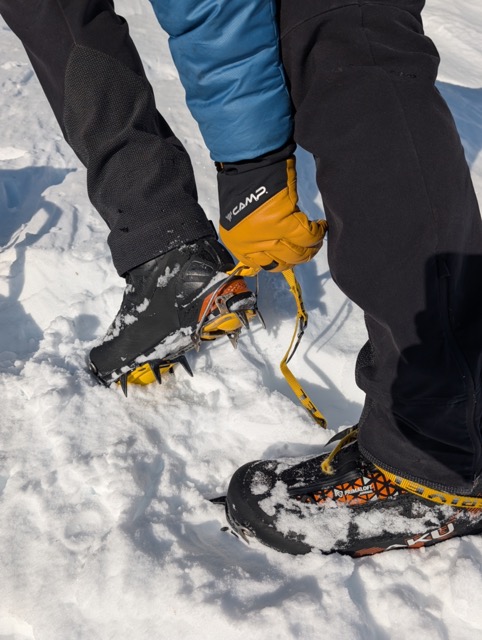
Where the fit of this boot really comes to shine is the variability in the lacing system that allows you to adjust the boot to the different conditions your foot needs throughout a day of climbing. This seems to be a theme with all the boots made by AKU, but with the Aurai they really seem to have knocked the lacing system out of the park. The “DFS” name attached to these boots describes AKU’s Dual Fit System, which uses two different lace patterns to adjust the boot’s tension around the foot.
The main lacing system, colored orange, criss-crosses the forefoot only half as often as a usual boot would and then comes up the in-step and ankle region with a more normal crossing pattern. Even cranking these laces as tight as you can possibly go and cinching them tight around the upper foot/ankle, the best tension you could achieve in the forefoot is a gentle “snug”. This is perfect for the long hikes in and out from your climbing where you want to relax your toes and let them spread, while maintaining a tension around the ankle that will prevent heel lift and blistering.
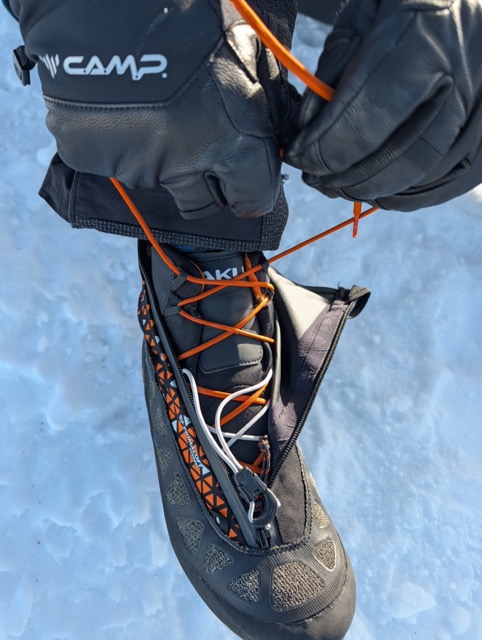
The second set of laces, colored white, cross the forefoot with ABOUT THE SAME AMOUNT AS the orange laces, but end at a quick-lacing tensioner right around the midstep of your foot. With a quick opening of the gaiter, you can easily cinch down this quick lace system and lock down the forefoot of the boot, which is perfect when you need tight performance on a difficult pitch of climbing.
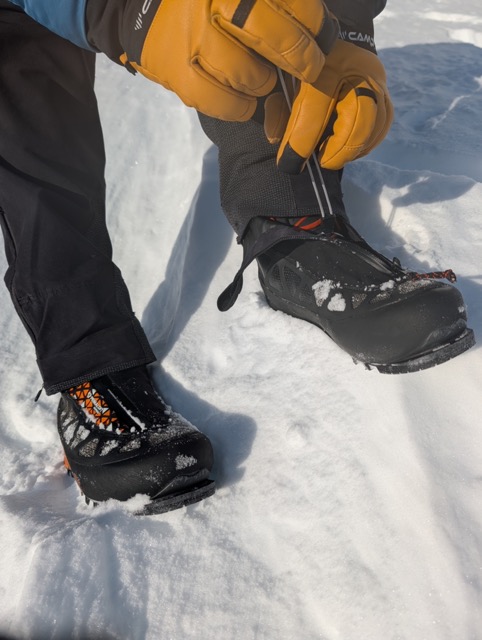
With both of these lace patterns I could find no real issue. I never had to retie the orange laces due to slipping in the knot, even after a long day with thousands of feet gained and numerous miles. The quick lace cinch of the white laces never seemed to cause a pressure point through the cushioned tongue, even when pulled tight for hours.
As someone who can wax poetic (and often has) about the advantages of traditional laces over the flashy new Boa systems, this boot seems to be the pinnacle of all my arguments. Sure it won’t match a Boa for instantaneous convenience in tightening, but I’ll be darned if this isn’t the closest you can come to it while still maintaining the reliability and replaceability of more standard laces. For me, it’s a no-brainer and an absolutely genius solution by AKU.
External Features
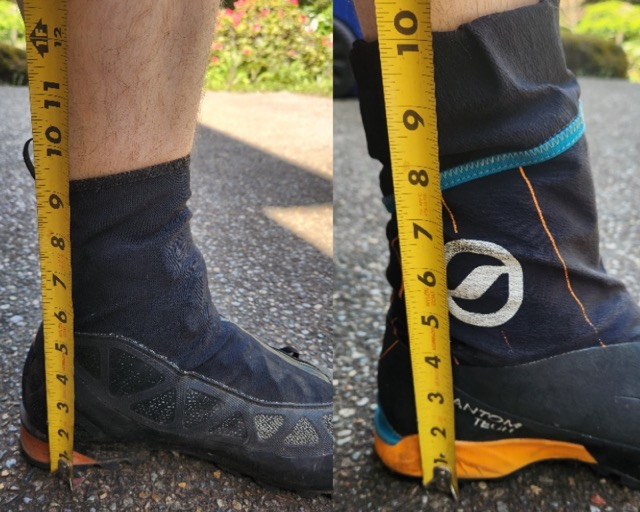
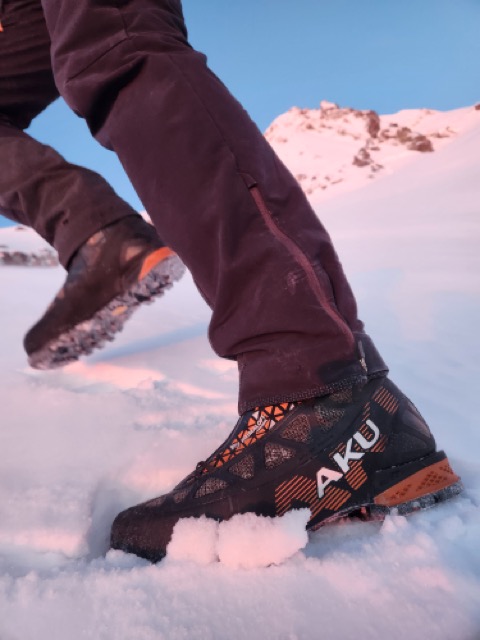
Like many higher-end winter boots out there, the Aurai sports the ever-sexy integrated gaiter we all know and love to keep snow and rocks out of our feet. That’s right, its not just to make the boots look cool (although it does a good job of this as well). Through photos online the gaiter on the Aurai boot looks quite a bit lower than other winter boots, so I did a bit of measuring to see how things lined up. Compared to my Phantom Tech boots, the gaiter on the Aurai sat around 1 inch lower down my leg, however I did not find this to be a practical issue as even on days hiking through deep powder I had no snow make it anywhere near the tight neck of the gaiter. This was thanks in part to the external boot hook loop on the gaiter which, when paired with the right set of winter hiking pants, gives you a point on the outside of the boots to hook your pant cuff into and keep snow from pushing up your leg when post-holing.
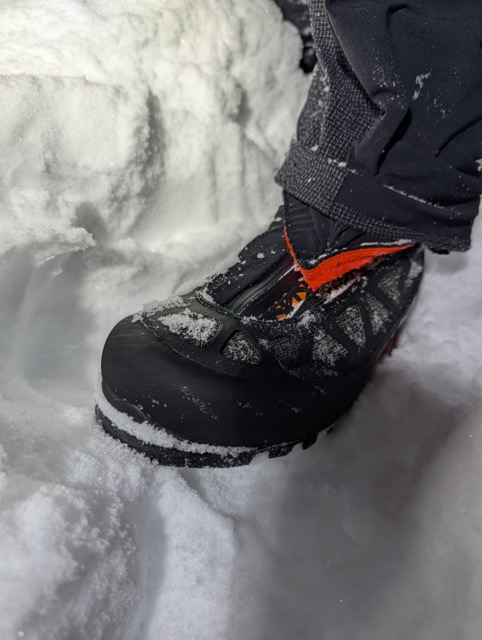
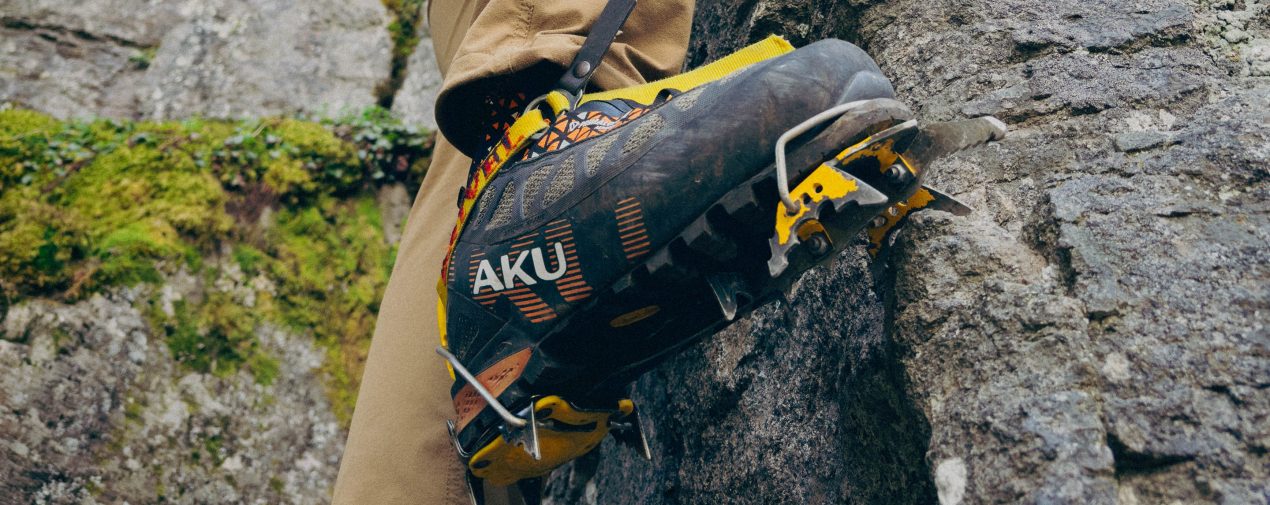
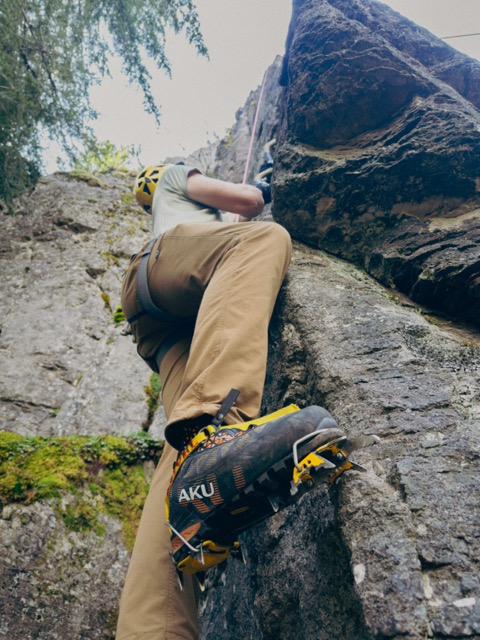
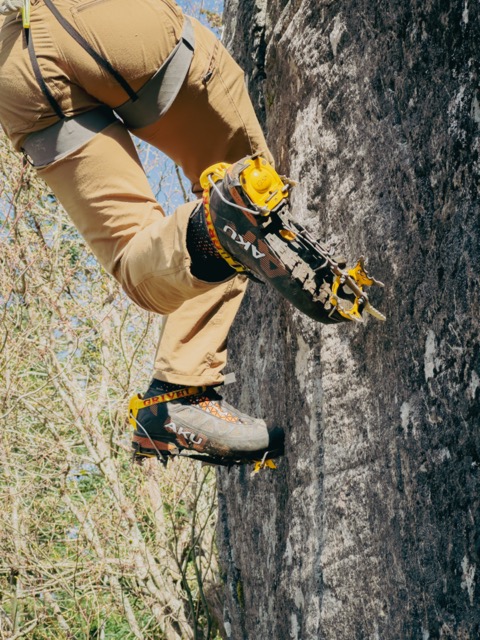
The other external feature I like to really examine on any winter climbing boot is the toe and heel welts. Yes, like any good 4-season climbing boot the Aurai comes with both toe and heel welts to facilitate the use of fully-automatic crampons, but I like to examine these a bit further due to some personal experiences. As someone who has fit crampons onto literally hundreds of people’s boots over the years I can tell you that the biggest point of concern for me is often the toe bail connection. The heel lever seems to always work out since it is the final piece to adjust and doesn’t often foul, but I cannot tell you how often I have seen toe bails barely sitting on the ledge of a toe welt that was too small from design, worn down by years of abuse, or clogged with snow and ice. I have seen many a climb where crampons fell off mid-pitch due to worn off toe welts, and even helped with a self-rescue situation where a climber fell due to poor toe-bail contact. AKU seems to be aware of this issue, as the Aurai has a deep toe welt with a wide contact area to make sure you get a good connection there.
Internal Features
The internal features of the boot are often the intangibles that you don’t ever interact with directly, but they do make up some important aspects of the boot. Perhaps the most important of these “internals” is the weight, which at a size 42 I clocked in at 847 grams. Compared to my Phantom Tech’s of the same size which weigh in at an identical 847 grams, the Aurai is in a great weight class for high performance.
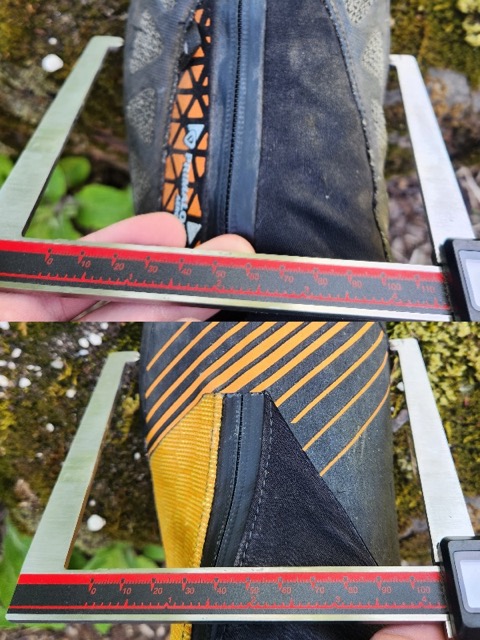
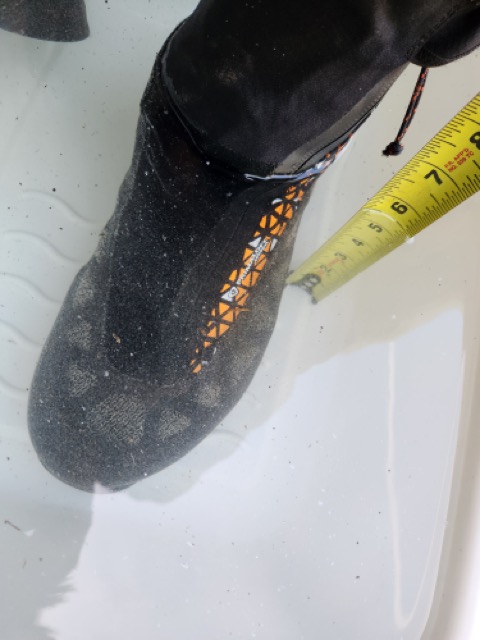
The low weight doesn’t mean they skimped on any of the other internals, however. These boots contain Primaloft insulation to keep your feet warm, and a Goretex liner to keep them dry. The inner liner of the gaiter looked more waterproof to me than other boots I have used, so I decided to give them a proper waterline test. When submerged in a tub of water, the boots had a bit of water creep in at the zipper with a water line of approximately 3 inches. However, due to the waterproof liner on the inside of the boot I didn’t actually feel any water hit my foot until they had been submerged in 5.5 inches of water, and even then it was only a slow trickle. In the mountains, when I wasn’t dunking my boots in water, the boots felt dry the whole time.
Performance
To test all of these features I was able to take them out in the cascade volcanoes, where springtime conditions vary quite a bit. One day saw us turn around from our objective after 10 or so miles of hiking through several feet of fresh, deep snow. On this “day”, or more accurately “wee hours of the night”, I was glad to have the gaiter and boot cuff loop to help keep snow out of my feet and warm all the way back to sunrise at the car. On a few more successful days I was able to bring the boots up several of the larger volcanoes around home, where the boots really shone on the many thousands of feet up and down the mountains.
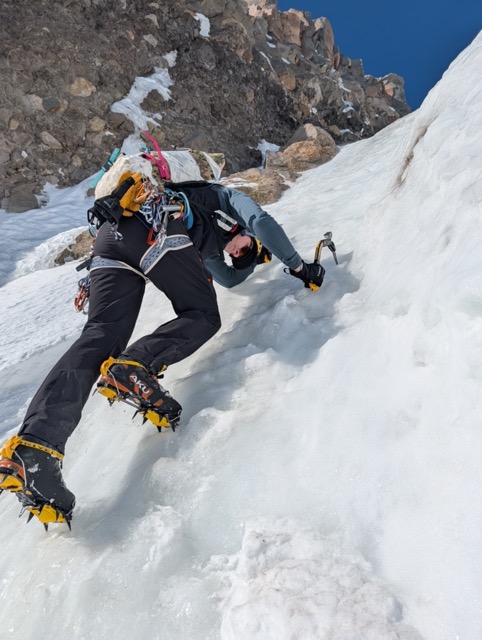
Having the forefoot laces comfortable and loose for a long approach was great, and when it came time for a climbing route that was a couple thousand feet of ice climbing and front pointing up AI2-3 I was able to quickly cinch down the boot for a tighter fit. The whole way up the ice, I never felt any toe-bang or hot spots to complain about, and that stayed true even after 5 thousand feet of descent back to warmer trails below. In all my trials with the Aurai on, they really just felt like “my boot”: with no break in period or strange fit to complain about.
Should You Buy?
As someone who is known to those around him as the aforementioned gear nerd, I often get asked my opinion on what gear to buy. While I can go deep into detail on why specific bits of gear are better for certain applications, I often come back with two specific parameters: fit and price. In a sport where there are lots of great companies making high-quality gear, a gear review might lead you to focus on all of the specific differences that make something better for you, when all you really need is a good boot that fits your foot and your wallet.
While I would have to guess that the AKU Aurai Evo boot will fit your foot based on its accommodating width and superb lacing system, the one thing I won’t have to guess much on is the price. Compared to the equivalent competitors in the market that all punch around the same weight class and price tag, the Aurai comes in at around 3/4ths of the retail price. I have never seen a boot of this class from one of the better-known brands ever even go on sale for a price like this, and this simple fact makes it one of the more attractive boots out there in my opinion.
If you are looking for a boot that can do it all; keep you warm and dry, comfortably loose yet capable of precise tightness, stable and secure for your crampons, you may have just found it from a company that will deliver it in a well made, durable, aesthetically pleasing, and “affordable” package. What’s not to like?
Find AKU Outdoor on Outdoor Prolink. Not a member yet? Apply today!
See more AKU Outdoor reviews.
About the Gear Tester

Evan Watts
Evan grew up in the small hometown of Boring, Oregon, where he cut his teeth hiking and backpacking in the local Cascades. He now enjoys ice climbing, backcountry skiing, and trail running around in the Western States, and manages to fight off permanent employment despite an environmental engineering degree and perturbed parents.
- Evan Watts

- Evan Watts

- Evan Watts

- Evan Watts

- Evan Watts

- Evan Watts

- Evan Watts

- Evan Watts
- Evan Watts
- Evan Watts

- Evan Watts
- Evan Watts

- Evan Watts

- Evan Watts

- Evan Watts

- Evan Watts
- Evan Watts

- Evan Watts