ProView – AKU Outdoor Hayatsuki GTX Review
Mountaineering is a sport where changing terrain and long days on your feet mean your boots are one of, if not the, most important parts of your kit. A typical day could mean marching through ankle-twisting scree, kicking your way up steep ice, and even rock climbing up some exposed ridges all on your way to reach the peak of the mountain. With one pair of footwear required to do all of this it is no wonder that boots are an often-debated and highly scrutinized topic. While personal fit is the largest determining factor in boots, I am happy to describe all of the other factors I have found in the AKU Hayatsuki during my testing that I think make it an outstanding candidate for anyone looking for their first or next pair of mountaineering boots.
AKU Outdoor Hayatsuki GTX
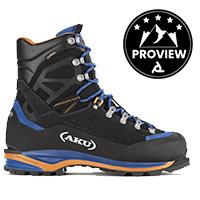
Product Name: AKU Outdoor Hayatsuki GTX
Product Description: The Hayatsuki GTX is perfect for hard mixed terrain at high altitudes up to 4,500 meters. Handcrafted by AKU in Montebelluna, Italy, and designed with elite athletes in mind, the Hayatsuki is constructed with only the best materials available. The Hayatsuki boasts a rubber and Liba®Smart PU protective rand, toe and heel welts for crampons, a lining with Primaloft® eGore-Tex® for thermo regulation, a heat-sealed exoskeleton, micro pulleys, an adaptive lace-lock system, and a double density exoskeleton midsole.
Offer price: MSRP: $550.00
Currency: USD
-
Quality
(5)
-
Features
(5)
-
Fit
(5)
-
Durability
(5)
Summary
A total suite of high-end materials, superior craftsmanship, and thoughtful design features means this boot sits above the competition of its weight class, in my opinion. For anyone looking to get “that boot that does it all” I would highly recommend trying out a pair of these.
Overall
5Pros
- Effective lacing system
- Warm insulation
- High-end construction
- Comparable weight and price
Cons
- No integrated gaiter
- Lacks convenience of BOA system
- Not designed for above 4000m peaks
Overview & Construction
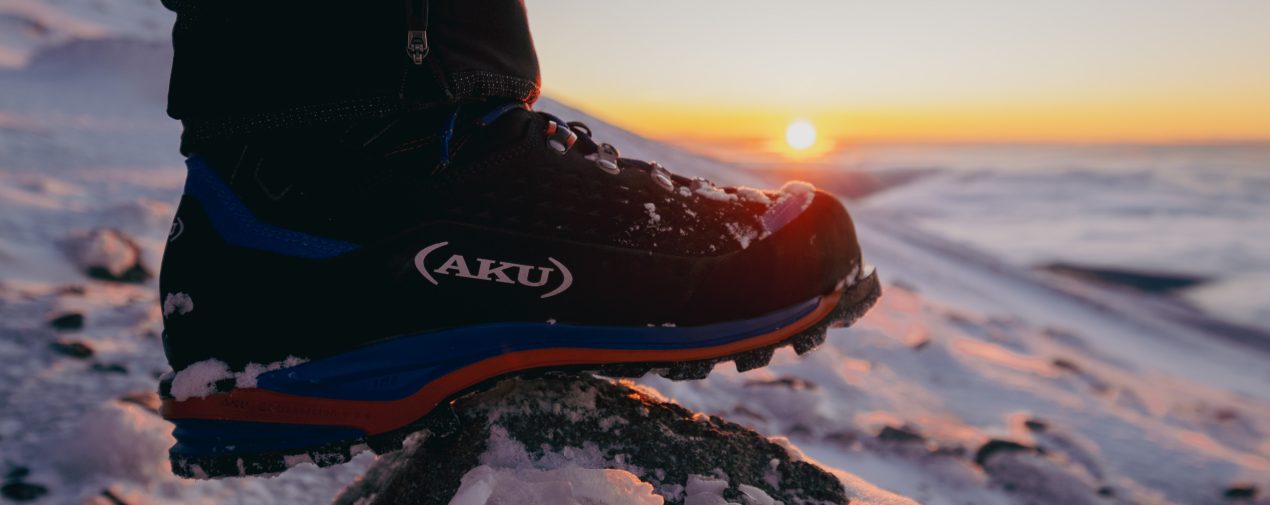
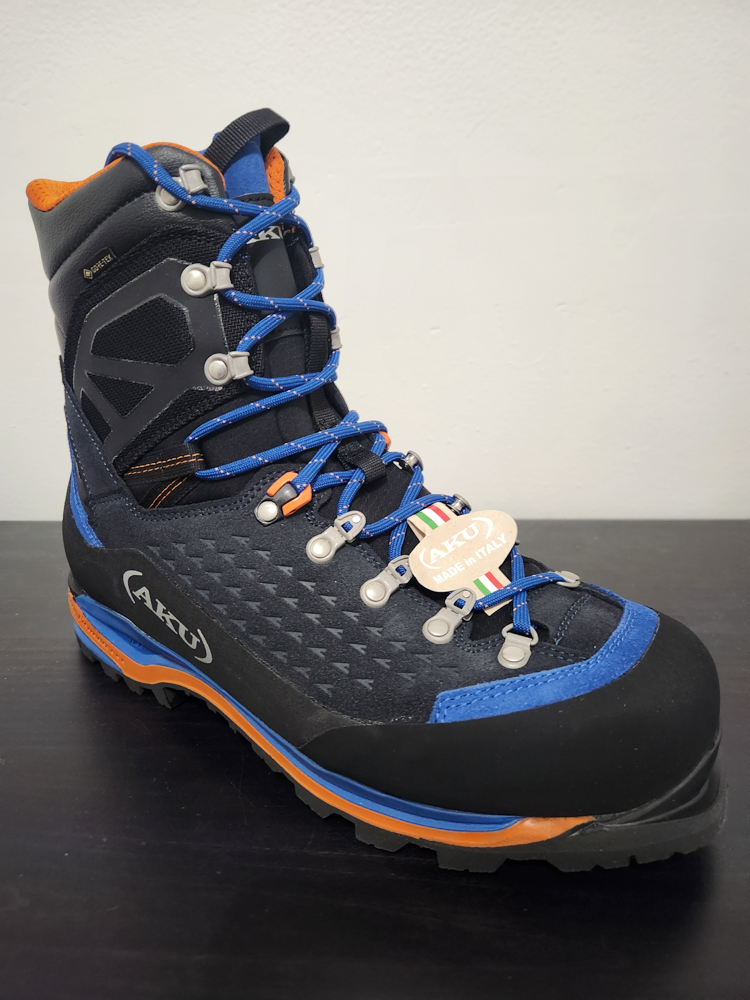
From a manufacturing standpoint, these boots are beautiful and incredibly well-made. A quick glance at them will tell you these aren’t as simple as your everyday pair of sneakers, sporting a build that blends quality leathers with high-end synthetics in numerous places. All of the stitching, gluing, and rivets appear masterfully attached at every point. Right out of the box, I had the impression that these boots had been designed and made by experts in the footwear craft. With only a few months to beat the boots up I have not had the extended time necessary to see how the boots withstand prolonged abuse, but my expectations are that they will hold up well.
As an added bonus, AKU traces all parts of their boots back to their location of original manufacture for added transparency regarding the manufacture. For the Hayatsuki, it is nice to see that all parts of this boot come from countries generally regarded to have higher quality standards for the parts themselves but better standards for the workers and environments that have a hand in and are affected by each step of the process.
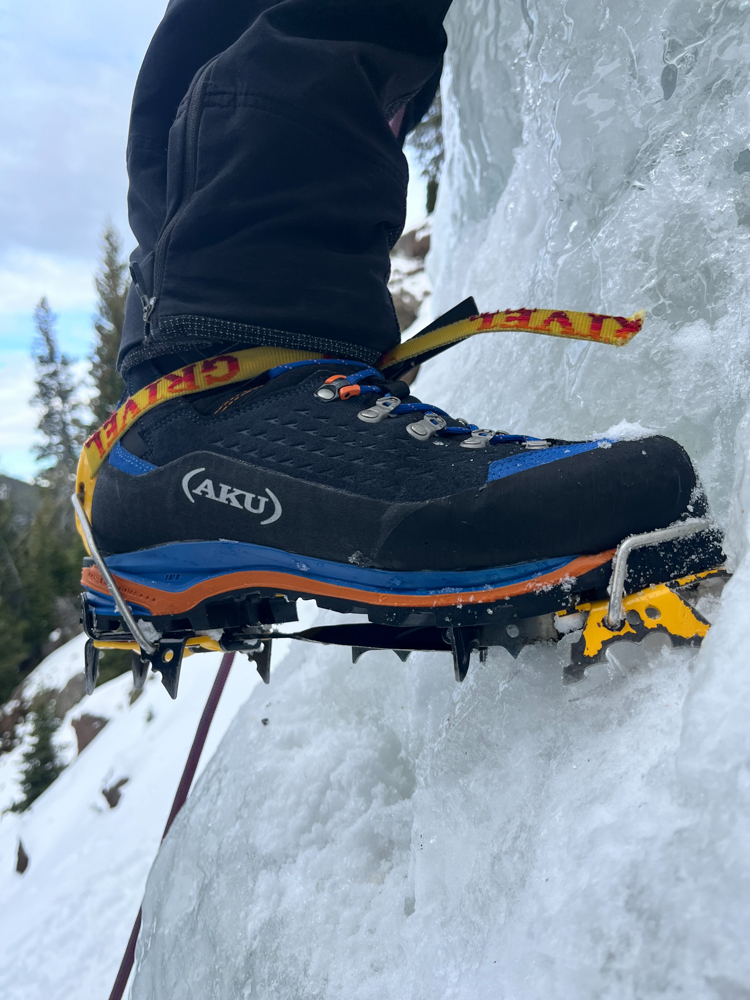
For the details, we’ll start with a weight of around 2lbs or 900grams per individual boot, which is on-par or lighter than similar boots from other well known brands. They are a single boot which sits in the range of standard winter mountaineering boots for peaks under 4000m, and employs the usual full shank and lugs that you would expect to facilitate use with any style of crampon. Along with other boots in the price range it does not include a built-in gaiter to keep out snow, however the tongue of the boot has a gusset that runs nearly to the neck and prevents ingress of snow at all but the very top of the boot. Pair all that with a Vibram outsole designed for the all mountain terrains you might see, and you have a boot built to get you up a myriad of peaks in all sorts of conditions.
Laces
Now I did leave something glaringly obvious out of my last section for good reason: it deserves its own discussion. Lacing systems on boots can be a huge part of the fit, comfort, and performance.
One increasingly popular design for winter boot closures is a cable and dial wheel with a power strap, or two of the cable-tensioning systems in tandem to isolate tension between the upper and lower boot. While these systems offer incredible convenience, they come at a much higher cost and the issue of an inability to repair them in the field should they fail (which I have seen all too often). Personally, something about metal cables tightening through fabric loops and a plastic dial wheel being smashed around on my ankle doesn’t inspire the level of robust durability that I would like when taking my boots into uncomfortable environments for extended periods.
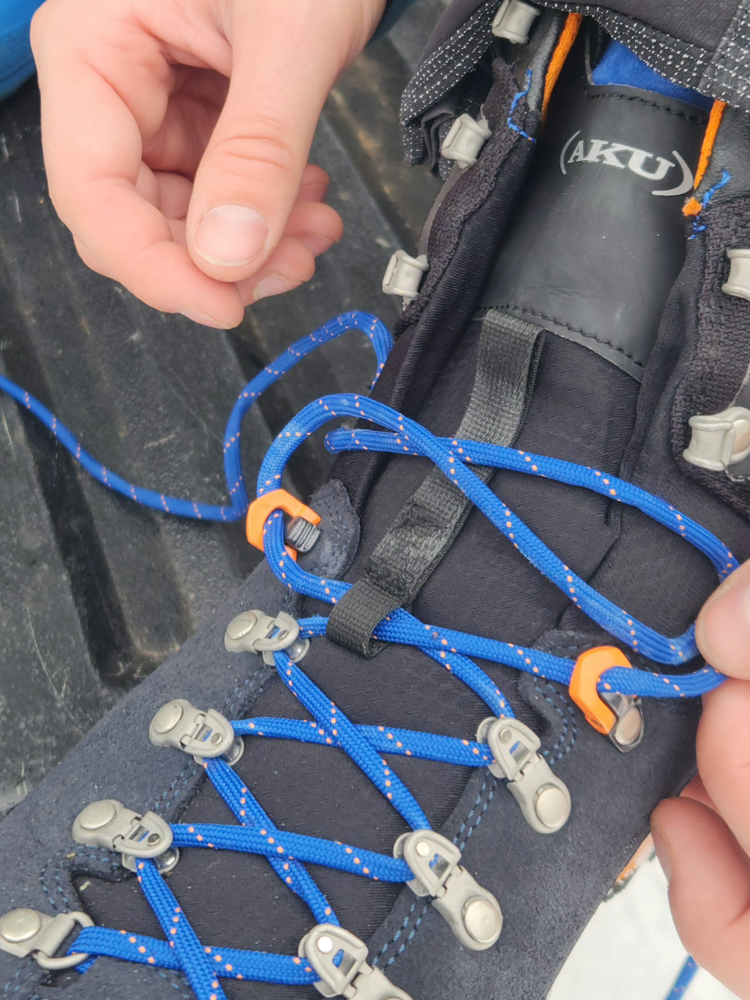
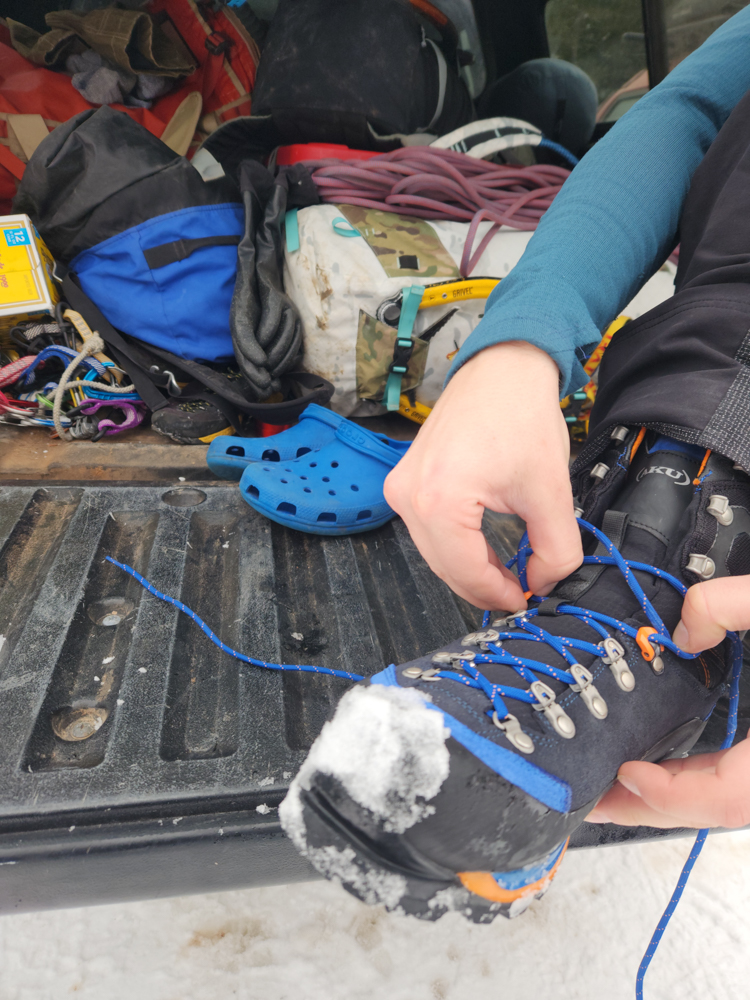
For a more economical boot, or brands trying to stay away from durability issues, a good old fashion lacing system is the standard. In order to isolate tension between the upper and lower boot with a lace system a lace-lock of some sort is employed. Normally, this takes the form of a small plastic or metal cinching device that sits in the middle of your boots’ laces, right where your instep flexes. The problem I have found with any boots using this system is that when tightened down and hiking, you experience a painful pressure point as your ankle bends forward and backward, at least until this motion and pressure eventually loosen the lace locking system entirely. Simple and easy to repair, but uncomfortable and not the most effective for truly locking in tension.
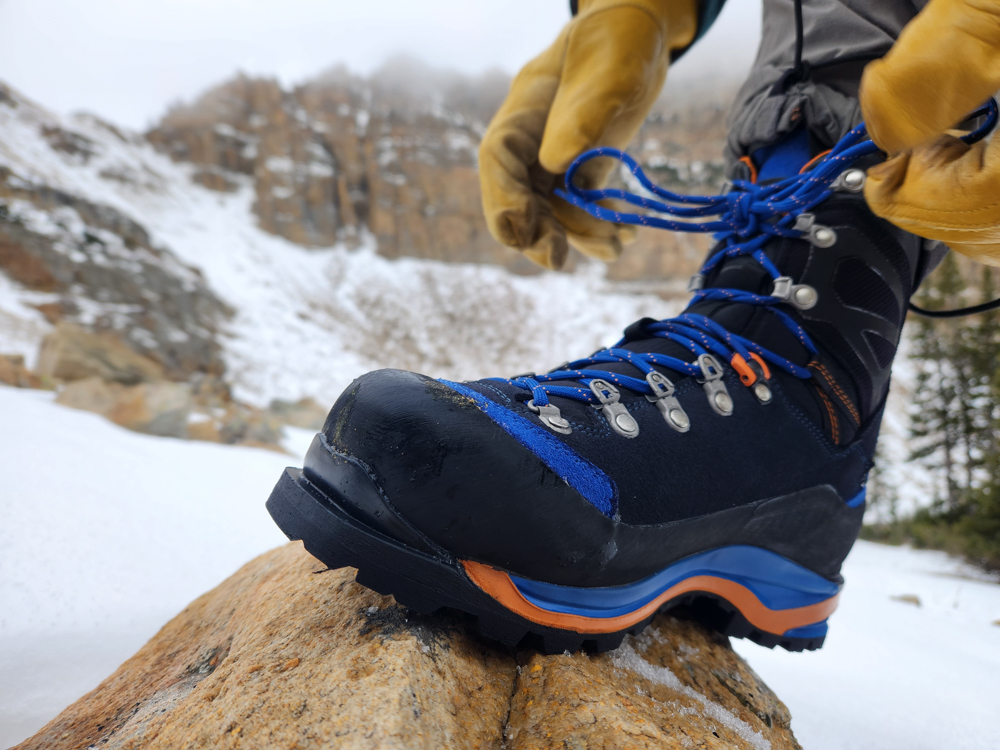
The laces on the Hayatsuki boots are the main gimmick that sets them apart from others in their class, but don’t let the pejorative of “gimmick” fool you. What AKU has done with the lacing system on these boots is, in my opinion, a brilliant solution to the problems outlined above.
On either side of the instep, the laces run through two small, metal gate locks that clamp down on the laces when closed. The gates have small metal grooves that serve as gentle teeth to hold the laces in place, and boy do they work. The gates seem to prefer being in the locked position and in all honesty are a bit tough to open back up once they are properly seated shut (which I count as a credit towards their function). These locks, combined with the small pulleys located at the forefoot eyelets, allow you to easily tension your boot and securely lock it in place for an entire day of climbing, no re-tightening needed. With the positioning of the locking mechanisms on either side of your foot they cause no painful pressure points, and the simplicity of the design means that you could re-lace your system with some spare cord if need be.
Function
The lacing system is a clever feature that implies a real thoughtfulness from its designers, who clearly want your boot to fit comfortably and work well. When I had to hike a great distance to get to my climbs, I would leave the forefoot loose, lock down the gates, and then tighten the upper boot to prevent heel lift while still having room for toes to spread. For steeper climbing I could lock down the forefoot and relax the upper boot to allow for a bit more ankle flexibility with precise footwork. All of this means you can adapt the boots performance to whatever terrain you are facing with a quick adjustment and re-tie of the laces.
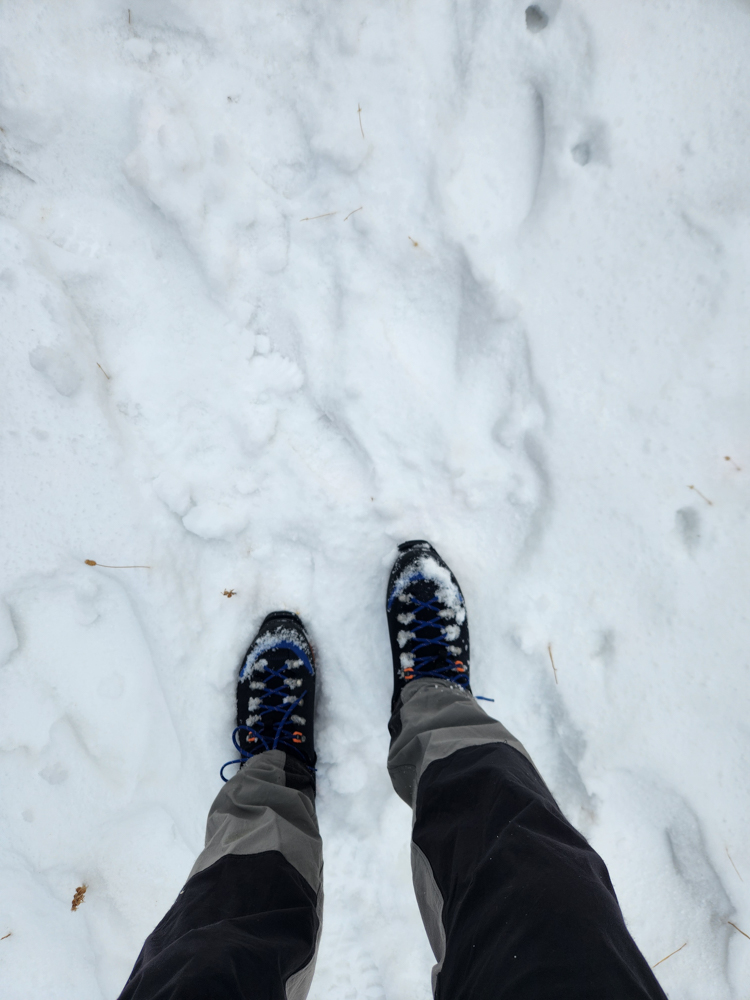
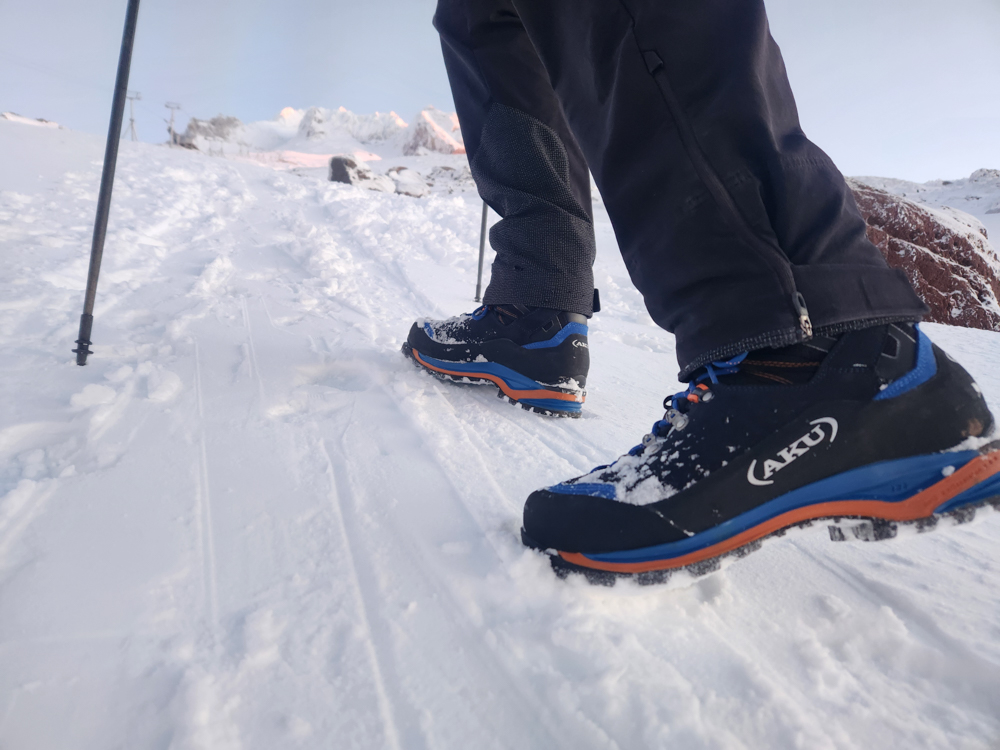
Effective lacing is important for more than just the physical comfort of the boot, but also the thermal comfort. With good lacing, a Gore-Tex liner, and Primaloft insulation I found these boots to be warmer than similar ones I have used in the past. Even on a long December day climbing up the shady side of a volcano, endlessly kicking through thousands of feet of an icy crust and submerging my boot in cold Cascade “concrete”, I never felt a tinge of cold. And yes, this did include several prolonged breaks to catch my breath, with my toes feeling toasty the whole time.
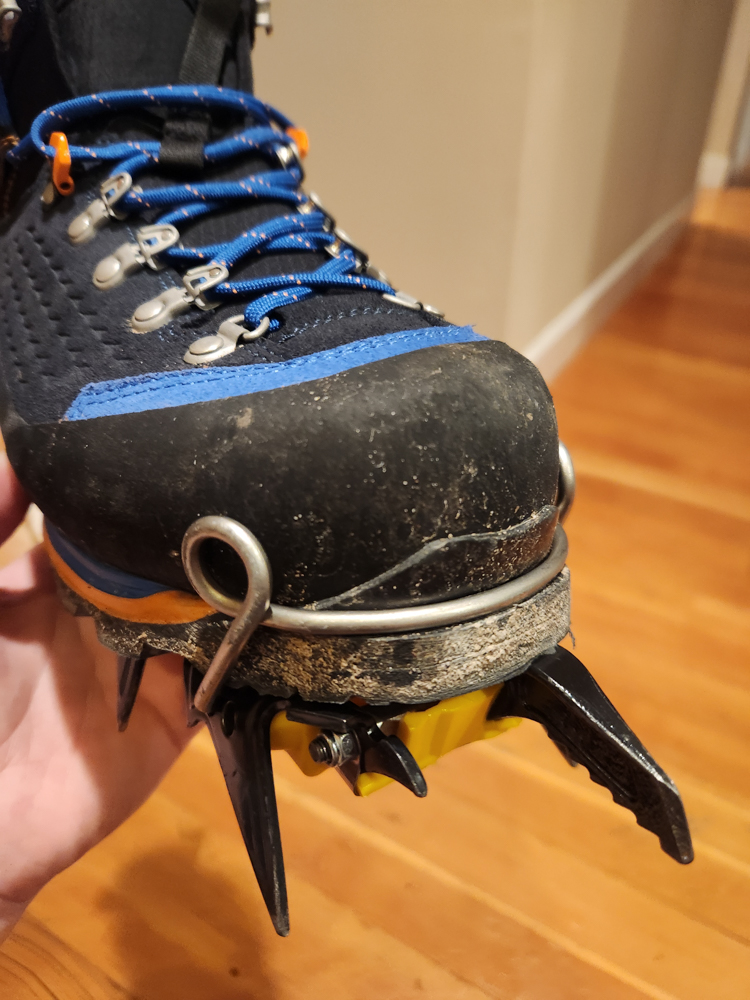
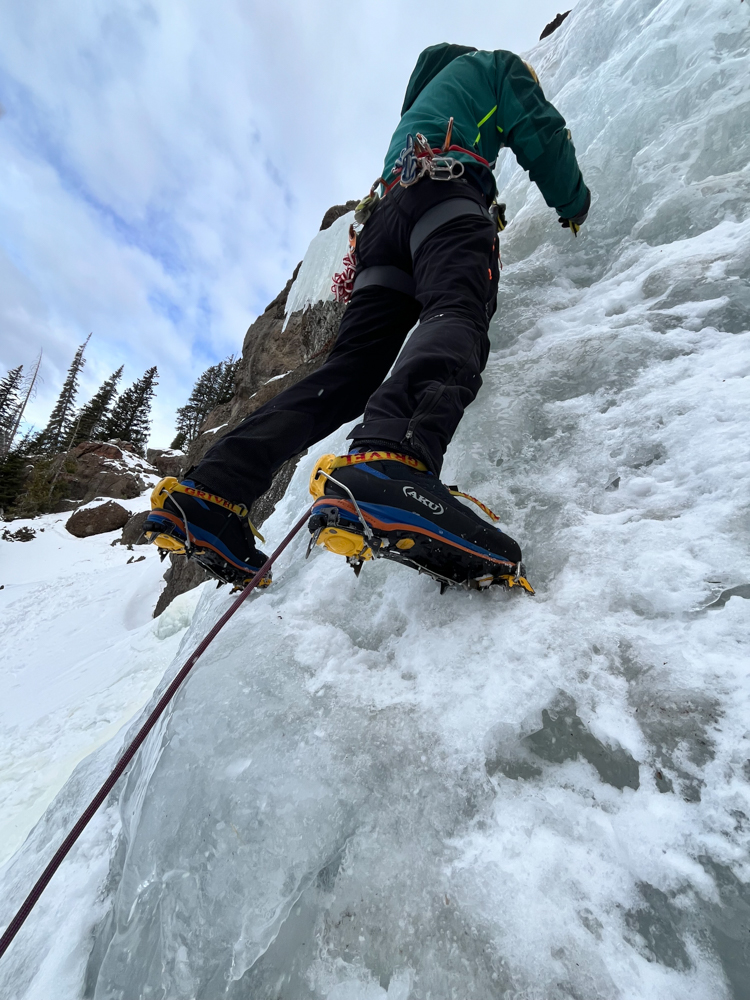
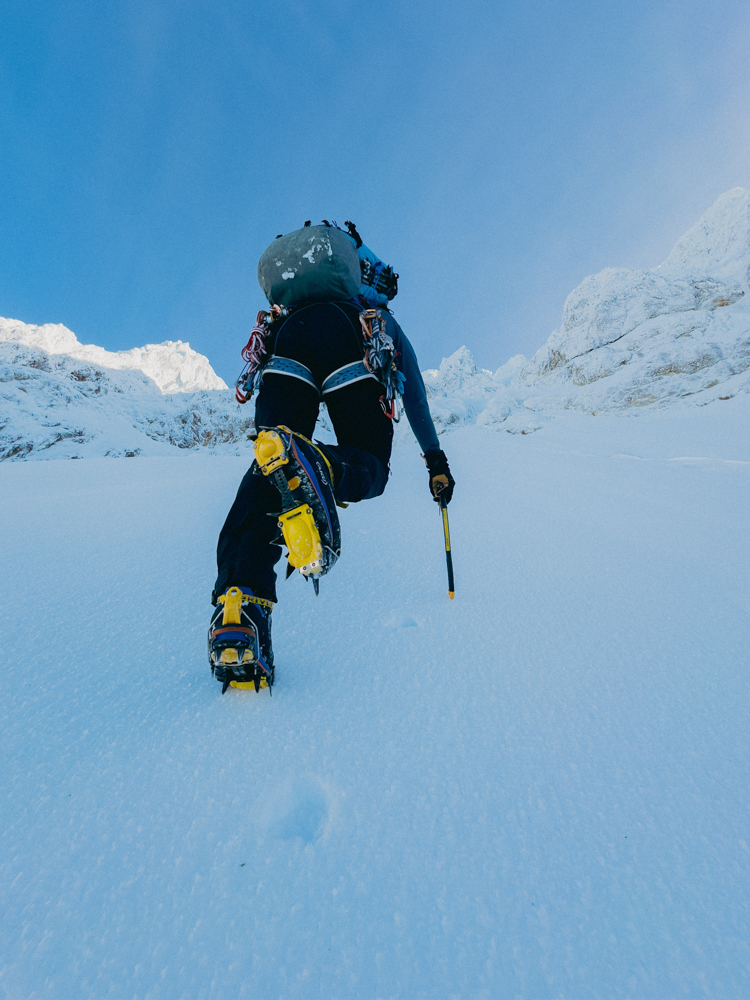
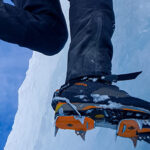
The final functional part of this boot that really stood out to me was the toe lug. It might seem like a pretty inert part of the boot, but when it comes to fitting fully-automatic crampons on to boots it can make a huge difference. Through years of winter climbing and a previous job, I can quite confidently say I have fit hundreds if not thousands of pairs of crampons onto all manner of boots. The number of times I have seen small and worn-down toe lugs, or the angular toe-bails of some crampons, leave an uninspiring amount of contact between boot and crampon is far too many. On numerous occasions, I have been party to small rescues or panicked leads due to one of these situations causing a crampon to blow off of the toe at an inopportune time. Thankfully, there is little chance of this situation with the Hayatsuki, as the toe lug on these seems dramatically more pronounced than on other boots.
Sizing
I know for most people, sizing is a big concern when it comes to buying boots. Every foot is different, and certain boots fit some people better than others so my ultimate recommendation is to try boots on if possible. With the popularity of online buying this is not normally a possibility, so I will go over the sizing on these boots as best I can.
The last that the boot is made on seems to be one that is generous in spacing and meant to fit a wide range of feet. For myself, with abnormally small and wide feet for my height, I found the size 9M (42.5 EU) to work well, although it was certainly on the roomier side. In most brands, I bounce between size 42.5 or 42 depending on if I want that boot to prioritise comfort or performance, respectively. With these boots, the 42.5 was certainly on the comfort side of things, and I actually think I could have gotten away with the 42 on them.
Recommendation
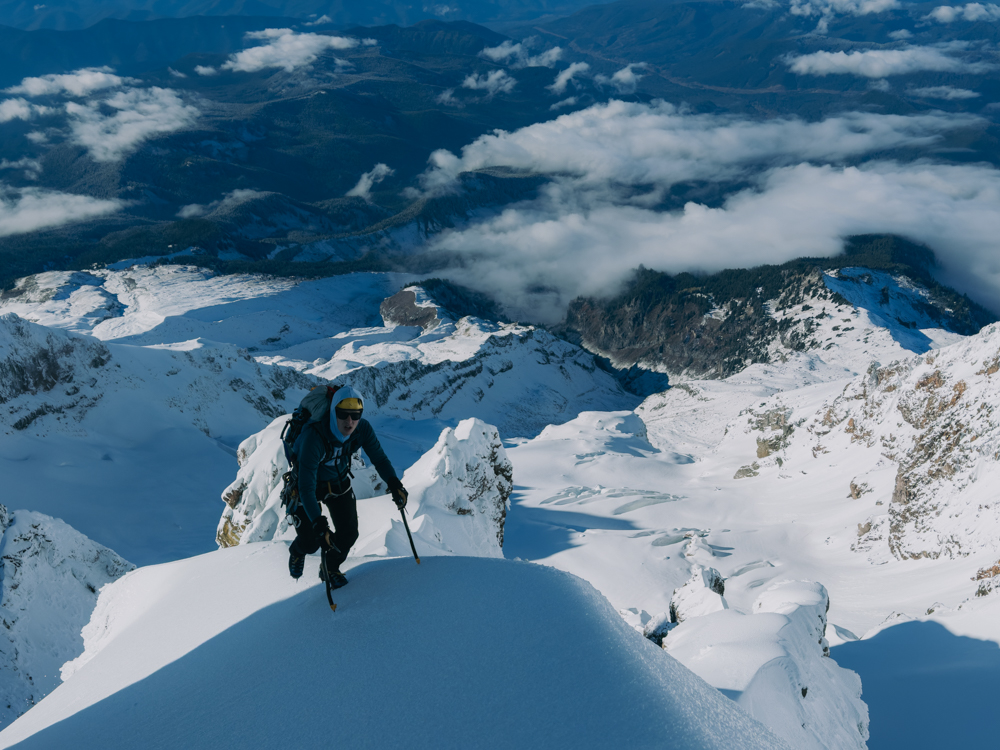
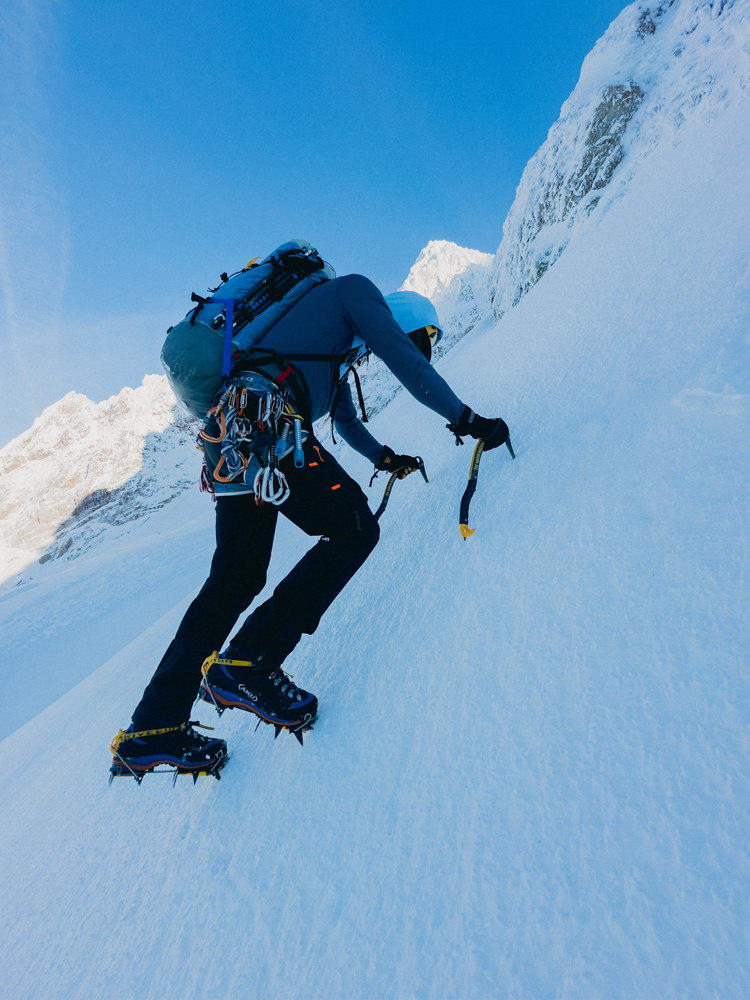
Within the category of mountaineering boots you can have a wide range of design focuses such as a 3-season boot meant for warmer climates, a high altitude double or triple boot, or a fancy dedicated ice climber. But within nearly every brand’s product line sits a definitive all-rounder boot that is meant for the broadest range of climbs and conditions. The Hayatsuki GTX fills that role for AKU, and it does it extremely well. A total suite of high-end materials, superior craftsmanship, and thoughtful design features means this boot sits above the competition of its weight class, in my opinion. For anyone looking to get “that boot that does it all” I would highly recommend trying out a pair of these.
Find AKU Outdoor on Outdoor Prolink. Not a member yet? Apply today!
See more AKU Outdoor reviews.
About the Gear Tester

Evan Watts
Evan grew up in the small hometown of Boring, Oregon, where he cut his teeth hiking and backpacking in the local Cascades. He now enjoys ice climbing, backcountry skiing, and trail running around in the Western States, and manages to fight off permanent employment despite an environmental engineering degree and perturbed parents.
- Evan Watts
- Evan Watts

- Evan Watts

- Evan Watts

- Evan Watts
- Evan Watts
- Evan Watts

- Evan Watts
- Evan Watts
- Evan Watts
- Evan Watts
- Evan Watts

- Evan Watts
- Evan Watts
- Evan Watts