
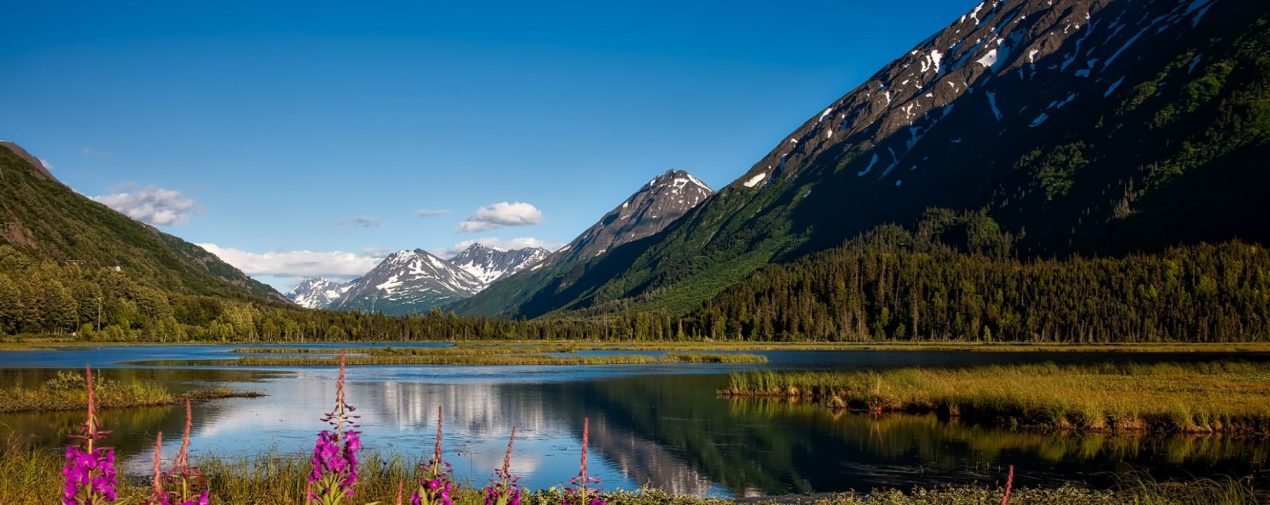
Ecology Spotlight: Hardcore Birds of Alaska
Here in Alaska, while everybody is rushing around to see a glimpse of a passing whale tail, I am instead appreciating the beauty of the birds that live up here. Some travel incredible distances, others dive deep into the ocean, and others simply endure the harsh winter of the Gulf of Alaska. The birds I see in the forests, shores, and open ocean do not receive the hype they deserve, but hopefully some of these incredible facts will help others appreciate their hardcore nature.
Common Murre
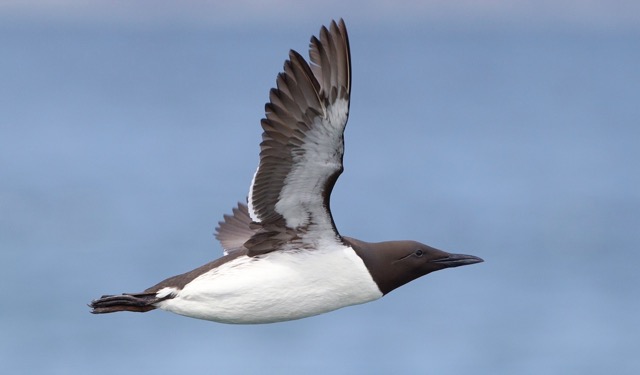
- One of the deepest diving birds in the world – can dive up to 600 feet!
- When the chick is ready to leave the nest, the dad will call it, and the chick will jump from 800 to 1,000 foot cliffs and glide into the ocean!
- They can stand on their own two legs within a day of hatching.
- They use their wings to fly under water.
- They have pointy shaped eggs that roll in a circle rather than roll off the nest/cliff.
- Parents are able to recognize their eggs by the markings on them.
Arctic Tern
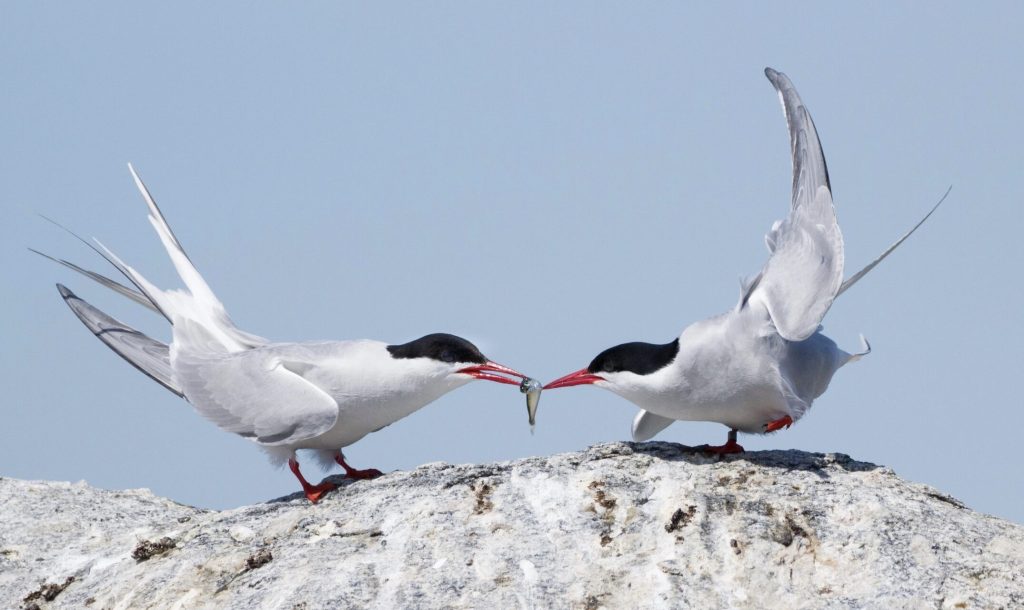
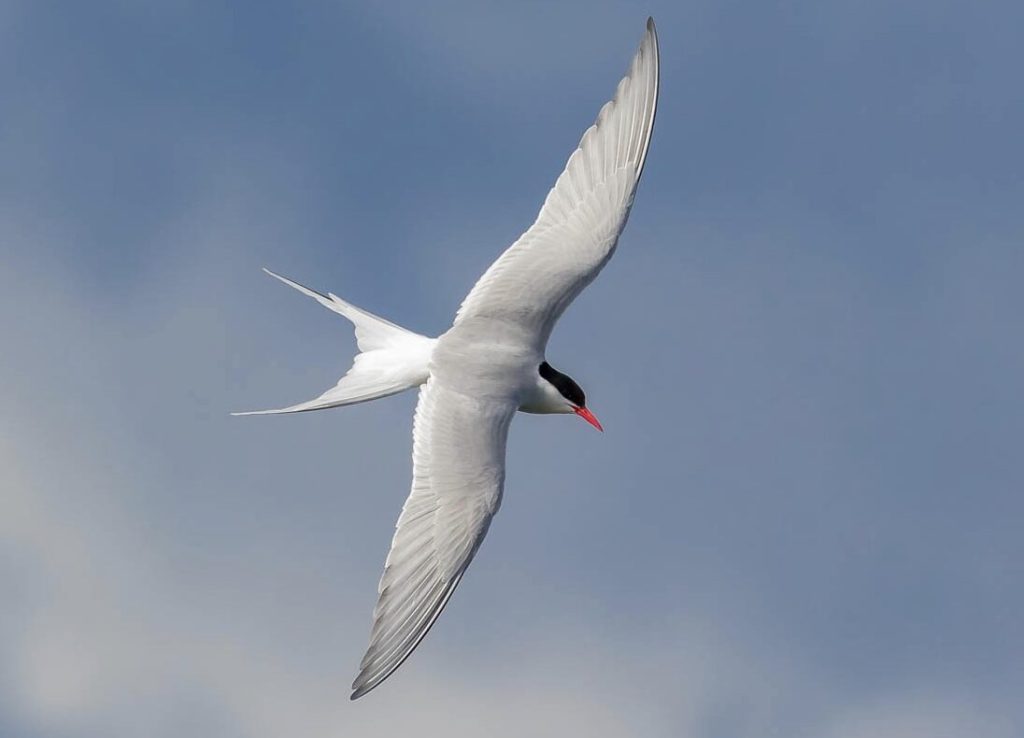
- Longest known migration in the animal kingdom!
- The arctic tern flies from its arctic breeding ground to Antarctica each year, which is 12,000 miles at the shortest. They travel an average of 44,000 miles a year!
- They see more daylight than any other creature on the planet!
- On average they live about 30 years and travel 1.5 million miles in their lifetimes, which is equivalent to traveling from the earth to the moon 6 times!
- They are 3.5 oz and can fly up to 25 mph.
- They tend to migrate off shore and are rarely seen from land outside of their breeding area.
Marbled Murrelet
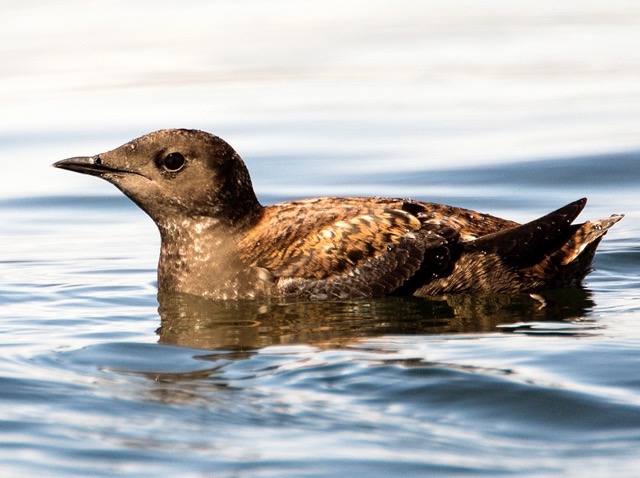
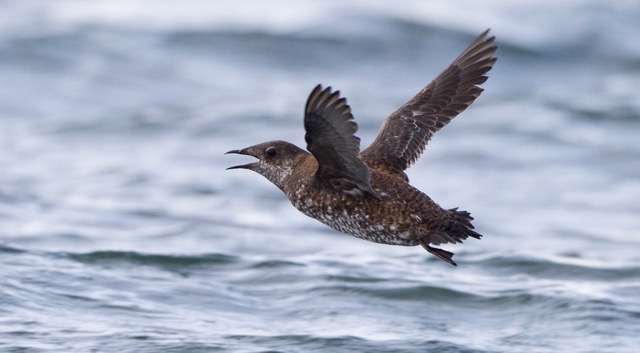
- To nest, they travel up to 50 miles inland and pick the largest old growth tree in the area, nesting in its mossy limbs. This is because their feet are clunky and they cannot build their own nest. After finding a sufficiently mossy spot they lay only one egg.
- Their nesting habits are not well understood and the first documented murrelet nest wasn’t found until the 1970s.
- For their first flight, babies fly 40-50 miles, directly from their nest to the sea.
- Mating pairs stay together year-round.
- Roughly the size of an American robin, they can dive up to 157 feet!
- 70% of the murrelet population lives in Alaska.
Harlequin Duck
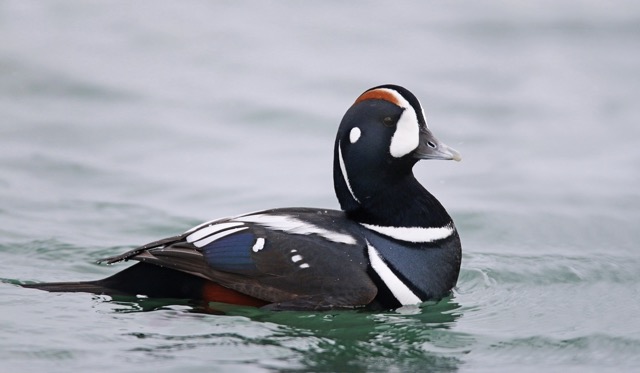
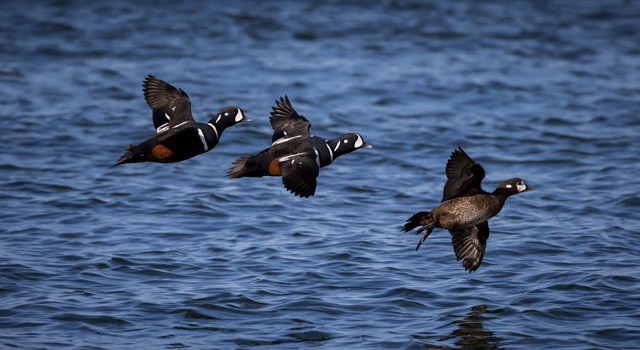
- Harlequin ducks are believed to have the most broken bones of any species on Earth! Most adults live with multiple healed fractures from being tossed around in rough water.
- They are the only duck to split their time between the sea and the mountains and go to live in turbulent alpine steams. Their niche is apparently white water and rough seas.
- Weighing in at less than 1.5 pounds, they are half the size of a mallard duck.
- Some scientist believe they follow streams back home similar to salmon.
- By September they are in coastal wintering areas and choose heavy surf rather than stay in protected bays.
Rufous Hummingbird
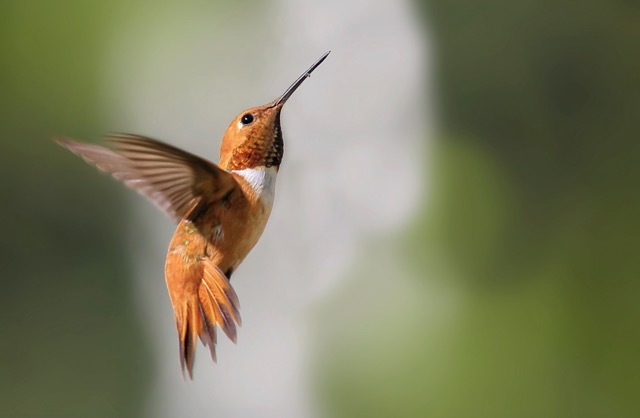
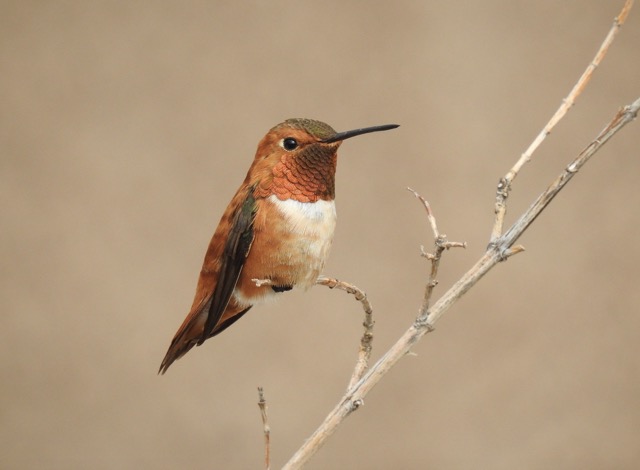
- They weigh an average of .12 oz.
- They nest the furthest north of any species of hummingbird!
- To build their nests they use soft plant material, held together with spider webs and camouflage them by sticking lichen, moss and bark to the spider web.
- They travel almost 4,000 miles from breeding grounds in Alaska to wintering in Central Mexico.
Hopefully you found these bird facts as mind-blowing as I do! Birds really are incredible creatures and accomplish heroic feats of nature; surviving brutal conditions, long migrations, and extreme challenges. So when you come to explore Alaska, remember to look beyond the obviously cool mammals, and admire the birds flying around you as well.
Citations
- ML27353991 – Marbled Murrelet – Macaulay Library. (2012, May 18). https://macaulaylibrary.org/asset/27353991
- ML156271061 – Marbled Murrelet – Macaulay Library. (2019, May 4). https://macaulaylibrary.org/asset/156271061
- ML65145691 – Rufous Hummingbird – Macaulay Library. (2017, August 4). https://macaulaylibrary.org/asset/65145691
- ML52544691 – Rufous Hummingbird – Macaulay Library. (2016, July 12). https://macaulaylibrary.org/asset/52544691
- ML26860111 – Harlequin Duck – Macaulay Library. (2013, December 28). https://macaulaylibrary.org/asset/26860111
- ML211261471 – Harlequin Duck – Macaulay Library. (2020, February 22). https://macaulaylibrary.org/asset/211261471
- ML114017081 – Arctic Tern – Macaulay Library. (2017, June 9). https://macaulaylibrary.org/asset/114017081
- ML62268111 – Arctic Tern – Macaulay Library. (2017, June 14). https://macaulaylibrary.org/asset/62268111
- ML252858111 – Common Murre – Macaulay Library. (2020, August 1). https://macaulaylibrary.org/asset/252858111
- ML27280751 – Common Murre – Macaulay Library. (2012, May 18). https://macaulaylibrary.org/asset/27280751
About the Gear Tester
Emma Ely
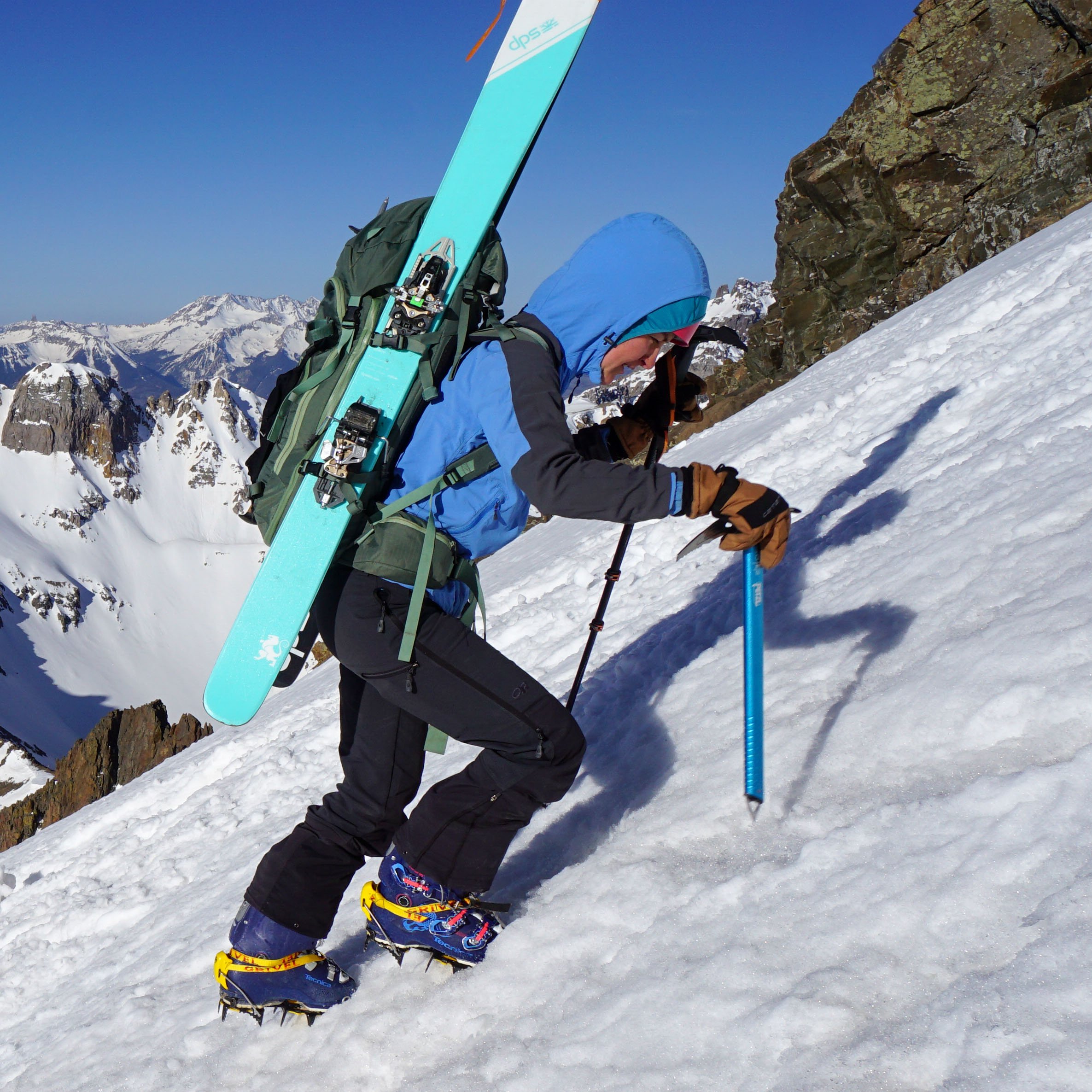
Emma is an Environmental Engineer, working for the State of Colorado to protect the quality and safety of drinking water. In her free time, Emma is an avid climber, ski mountaineer, and yoga instructor. You can also find Emma biking and drinking beer around her favorite town, Golden, with her adventure hound Zeke.

Zach Eiten
Zach is an aspiring alpinist, ski mountaineer, climber, and photographer. He currently works as a sea kayak guide in Alaska during the summer. He takes the winters off to ski and ice climb. Zach previously worked as a Wildlife Biologist in Colorado. You can find him climbing and skiing with fellow gear tester and wife, Emma and their adventure dog, Zeke.
-
Zach Eiten
-
Zach Eiten

-
Zach Eiten

-
Zach Eiten

-
Zach Eiten
-
Zach Eiten
-
Zach Eiten

-
Zach Eiten

-
Zach Eiten

-
Zach Eiten
-
Zach Eiten
-
Zach Eiten
-
Zach Eiten

-
Zach Eiten
-
Zach Eiten

-
Zach Eiten

-
Zach Eiten
-
Zach Eiten

-
Zach Eiten

-
Zach Eiten

-
Zach Eiten

-
Zach Eiten
-
Zach Eiten
-
Zach Eiten
-
Zach Eiten
-
Zach Eiten

-
Zach Eiten
-
Zach Eiten
-
Zach Eiten
-
Zach Eiten

-
Zach Eiten

-
Zach Eiten

-
Zach Eiten

-
Zach Eiten
-
Zach Eiten
-
Zach Eiten